Research highlighted by Women's Health links higher intake of ultra-processed foods (UPFs) to elevated inflammation markers. Those markers are associated with risks like cardiovascular disease, diabetes, and cancer. Here's the useful part: you don't need a kitchen overhaul to respond. By the end of this article, you'll know how to spot a hidden UPF and have a handful of Paleo-style swaps to try this week.
The approach below is "small upgrades," not fear and not perfection. Women's Health reports that experts want people to cut back on UPFs without aiming to be flawless, and that's the only version most of us can keep up.
What the research says (and what it doesn't)
According to Women's Health, new research ties greater UPF intake to higher levels of inflammation markers. Those markers are in turn associated with several chronic conditions.
Notice the wording: linked and associated. That describes a pattern, not a guarantee that one cookie causes one disease. It's a good reason to nudge your habits in a better direction, and no reason to panic over a single meal.
How to tell if a food is ultra-processed
UPFs make up a huge share of the modern food supply, which is why they're easy to eat without noticing. A practical way to catch them is the label check. Flip the package over and read the ingredient list before you read the front.
A quick label walkthrough
- Count and scan. A short list of ingredients you'd recognize from a kitchen (almonds, salt) is a good sign. A long list of unfamiliar additives suggests heavy processing.
- Ignore the front. Health-sounding claims on the package don't tell you how processed the food is. The ingredient list does.
- Check "healthy" foods too. Packaged items that feel wholesome, like granola bars, flavored yogurts, and bottled sauces, are common places for UPFs to hide.
This is a rule of thumb from me, not a formal definition. When you're unsure, ask whether you could plausibly make the item from what's in your kitchen.
Five easy swaps for common packaged foods
These are Paleo-friendly ways to replace everyday UPFs with simpler versions. They're my kitchen suggestions, built on the "real food first" idea.
1. Flavored yogurt cup → plain coconut yogurt with fruit
Stir in fresh berries or mashed banana. You control the sweetness, and the ingredient list shrinks to almost nothing.
2. Bottled salad dressing → olive oil and lemon
Whisk 3 parts olive oil to 1 part lemon juice, plus salt, pepper, and a little mustard. It takes under two minutes and keeps in a jar for several days.
3. Snack bar → nuts and dried fruit
A handful of almonds with a few dates travels as well as a bar does. Check that the dried fruit has no added sugar or oils.
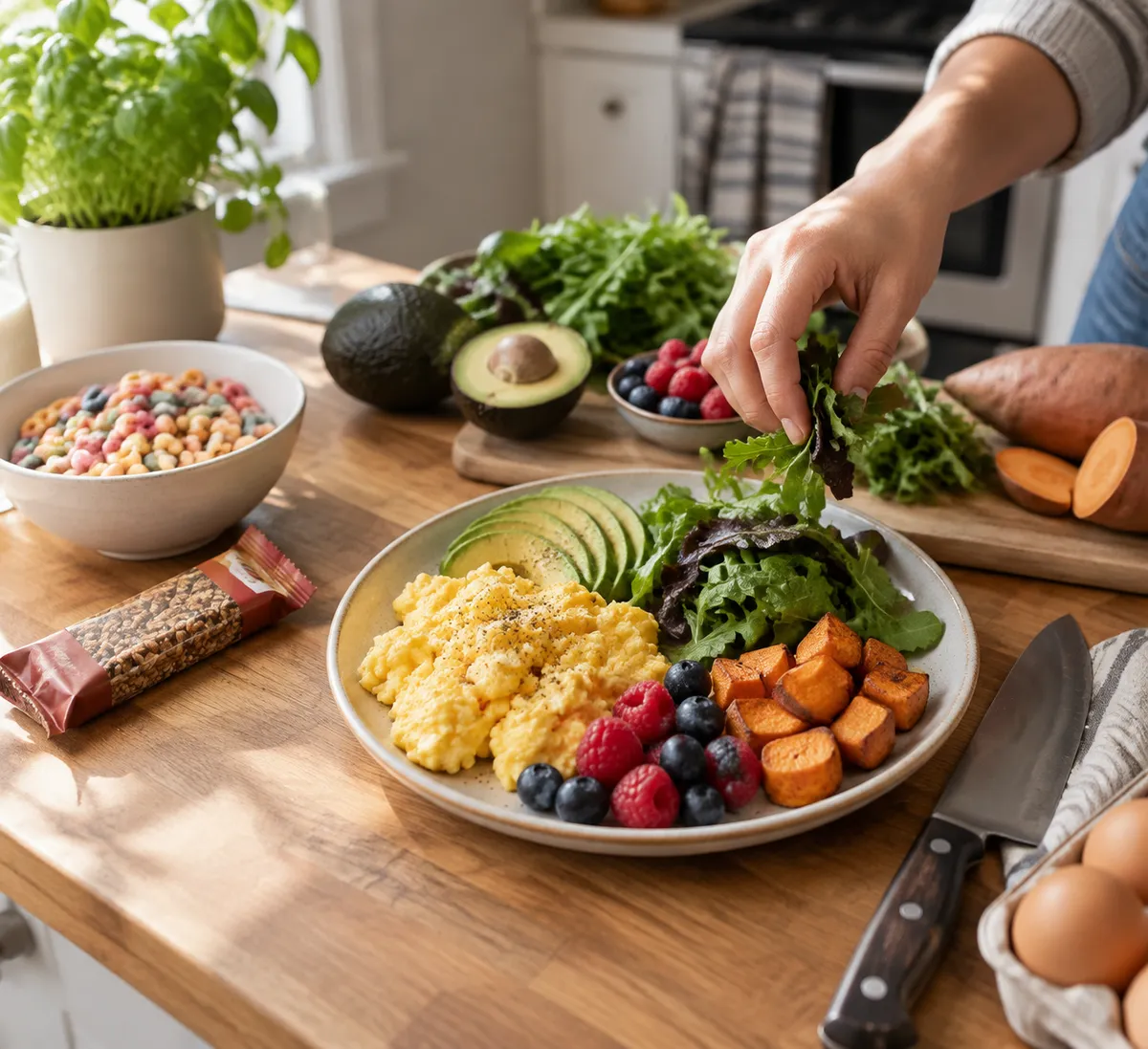
4. Boxed cereal → egg muffins or a fruit-and-nut bowl
Whisk eggs with chopped vegetables, pour into a muffin tin, and bake at 350°F for about 20 minutes. Make a dozen on Sunday and reheat through the week.
5. Packaged chips → baked sweet potato rounds
Slice thin, toss with avocado oil and salt, and bake until crisp at 400°F, flipping once. Keep an eye on them near the end since thin slices brown fast.
Build a low-UPF plate without giving up convenience
Convenience is where most plans fall apart, so lean on prep rather than willpower.
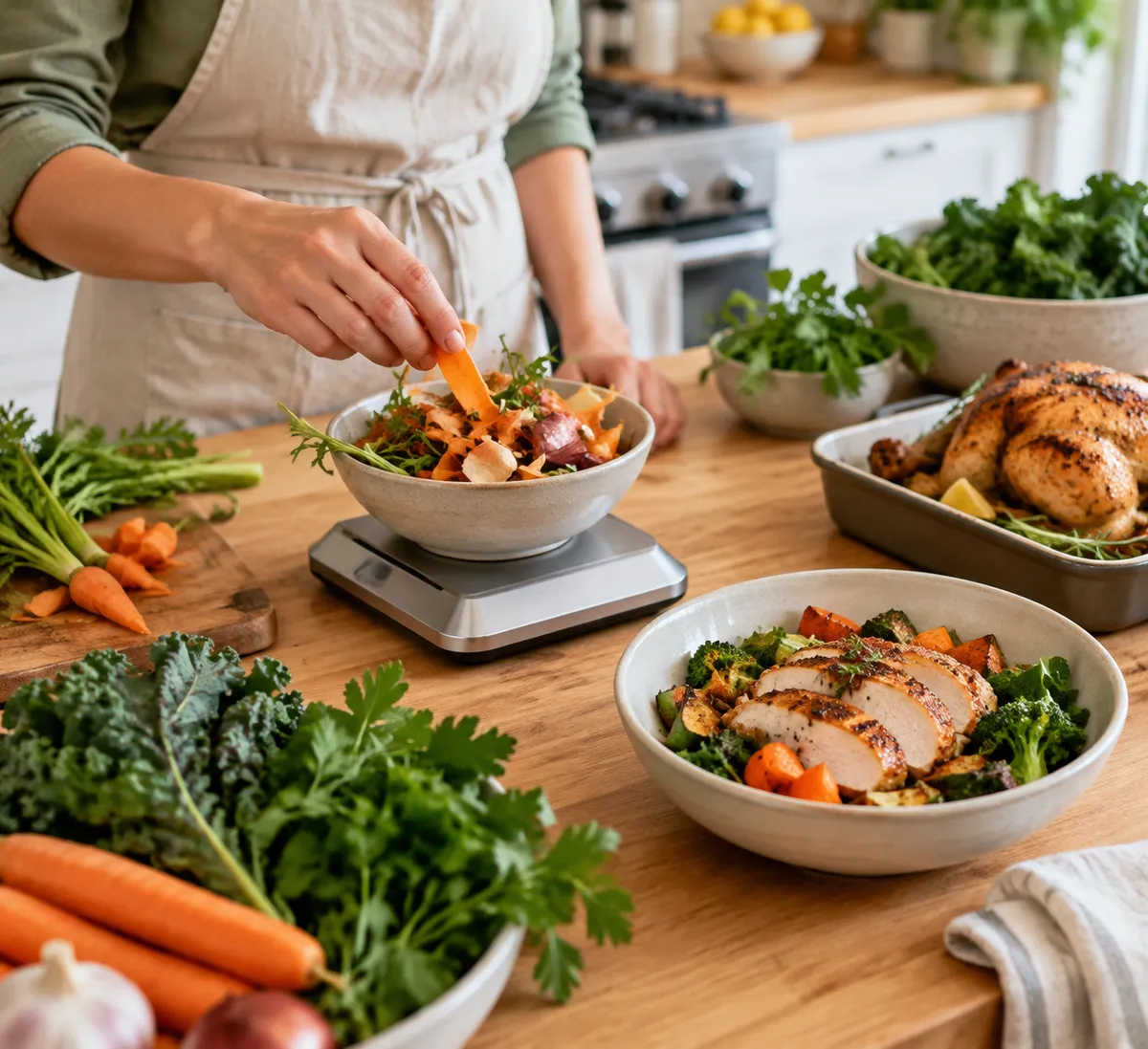
- Batch one protein. Roast a tray of chicken thighs or cook a pot of ground beef with onions. Use it across three meals.
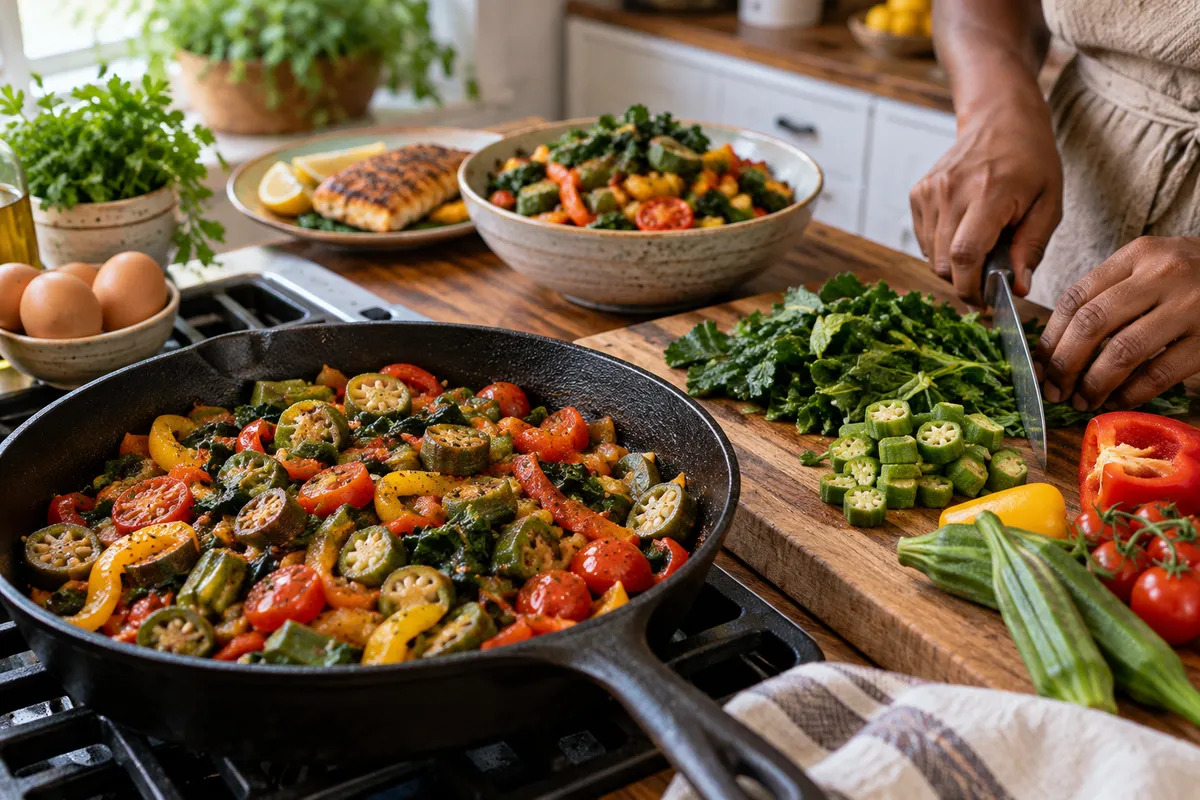
- Wash and chop vegetables once. Store them in containers so a one-pan dinner takes ten minutes to assemble.
- Keep a few simple backups. Canned fish, bagged salad greens, frozen vegetables, and eggs are minimally processed, quick, and shelf- or freezer-stable. Check labels for unneeded additives.
- Stock a snack drawer. Nuts, fruit, and plain jerky-style options (read the label) beat grabbing whatever is nearby when you're hungry.
What "real food first" looks like on a busy day
Here's one realistic day:
- Breakfast: Two egg muffins and an orange.
- Lunch: Leftover roasted chicken over greens with olive oil and lemon.
- Snack: Almonds and a few dates.
- Dinner: One-pan sausage (check the ingredients) with sweet potato and broccoli.
Nothing there needs a special trip or an hour of cooking. And if tomorrow includes a packaged lunch, that's fine. The goal is a better overall pattern, which matches the expert advice Women's Health relays: reduce UPFs, don't chase perfection.
Start with one swap
Pick the packaged food you eat most often, find it in the list above, and replace it for one week. Once that feels automatic, choose the next one.
If you have a medical condition or concerns about inflammation, talk with your doctor or a registered dietitian before making major changes.