
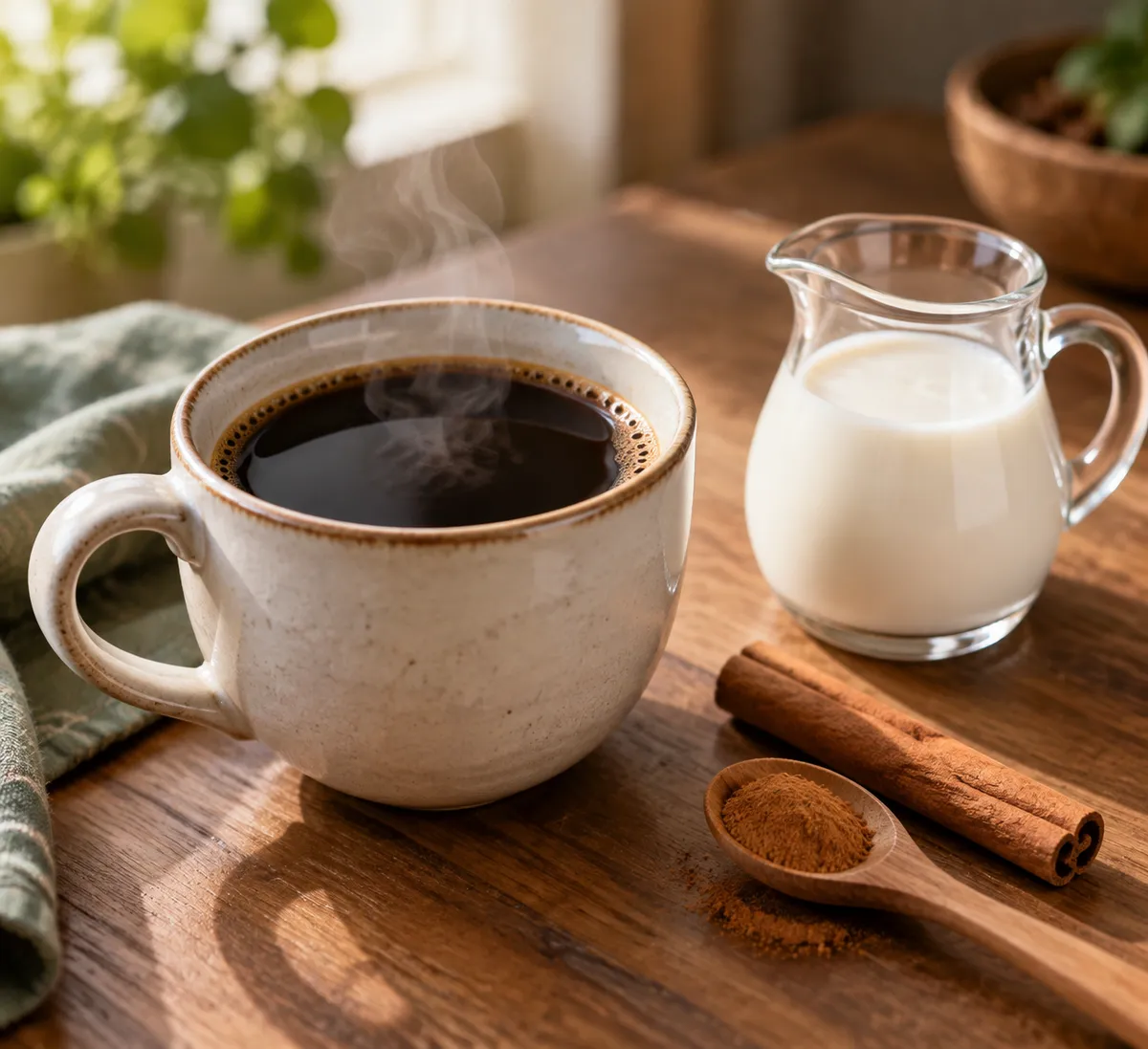
Americans aren't drinking much more coffee than they used to, but they're getting a lot more calories from it. According to a study reported by Healthline, coffee consumption among U.S. adults stayed stable between 2003 and 2018, while calories from coffee beverages climbed nearly 40%. The biggest driver was non-dairy creamer, whose contribution roughly doubled, from 7.7 to 18.5 calories per day.
That's the average, and it's not huge on its own. But it points to something useful for anyone eating Paleo-style: "non-dairy" on a label doesn't mean "simple," and your morning cup is an easy place to quietly lose track of what you're eating. Here's how to check your cup, and how to swap in options that fit a whole-food approach.
What the Study Actually Found
The details, per Healthline's report:
- Coffee drinking among U.S. adults held steady from 2003 to 2018.
- Calories from coffee beverages rose nearly 40% over that period.
- Non-dairy creamer was the main culprit, going from 7.7 to 18.5 calories per day on average.
- Over 60% of Americans drink coffee daily, so small shifts in the cup add up across a lot of people.
The takeaway isn't that coffee is a problem. It's that the add-ins changed, and many people didn't notice. Black coffee is a near-zero-calorie drink. Once creamers, syrups, and sweeteners enter the picture, it behaves more like a snack or a dessert.
Why "Non-Dairy" Isn't the Same as Paleo
Many Paleo eaters skip dairy and reach for a non-dairy creamer by default. It makes sense, but the swap can backfire. The study doesn't break down specific brands or ingredients, so I won't make claims about any particular product. What you can do is read your own label, because that's where the answer lives.
The 30-second label check
Flip your creamer over and look at three things:
- Serving size. Many people pour well past a tablespoon. If the label's calories are per tablespoon and you use three, multiply.
- Sweeteners. Check for sugar, cane syrup, or other sweeteners high on the ingredient list. Ingredients are listed by amount, so earlier means more.
- Length of the list. A creamer with a long list of additives is a different product from a short list of recognizable foods. Choose the shorter one when you can.
If you find yourself reading words you wouldn't cook with, that's your cue to try a simpler swap.
Smart Swaps for a Better Cup
These are all easy to make from pantry staples, and none require a special product.
Canned full-fat coconut milk
Shake the can, then stir a spoonful or two into your coffee. It's creamy, shelf-stable, and has one ingredient if you pick a plain version (check the label, since some contain gums). Keep an open can in a jar in the fridge and use it within a few days.
Unsweetened nut milk
Almond or cashew milk gives a lighter, milkier cup. Choose unsweetened, and check the ingredients for added sugar. It's thinner than creamer, so you may want a splash more than you're used to.
Homemade creamer
A simple batch that keeps for several days in the fridge:
- 1 can (about 13.5 oz) full-fat coconut milk
- 1 cup unsweetened nut milk
- 1 teaspoon vanilla extract
- Optional: 1 to 2 teaspoons maple syrup or a few soaked, blended dates for sweetness
Blend or whisk everything together, pour it into a jar, and shake before each use. Start with the minimum sweetener and cut back over time if you can.
Flavor Without the Sugar
If you drink flavored creamer mainly for the taste, you can get much of that from spices and extracts:
- Cinnamon: Stir it into the grounds before brewing or sprinkle it on top.
- Vanilla extract: A few drops in the mug gives that "café" smell and a hint of sweetness.
- Cocoa powder: A teaspoon of unsweetened cocoa whisked in makes a mocha-style cup.
- Chicory root: Roasted chicory can be brewed alongside coffee for a deeper, slightly sweet roasted flavor.
- Pinch of salt: A tiny amount in the grounds can soften bitterness.
Step Down Instead of Quitting Cold
If you're used to a sweet, creamy cup, going black overnight can feel punishing. Try a gradual path:
- Week one: Measure what you pour now. Use a tablespoon so you know your baseline.
- Week two: Swap to coconut milk or unsweetened nut milk at the same amount.
- Week three: Cut the amount by a third and add cinnamon or vanilla.
- Week four and beyond: Cut again, or stay where you're happy. A small splash of something simple is still a fine choice.
Your palate adjusts faster than you'd expect. A cup that tasted bitter a month ago can start to taste smooth.
When You're Ordering Out
Coffee shops make it easy to add calories without noticing. A few habits help:
- Ask for your drink with a splash of plain milk or an unsweetened milk alternative if they have one, rather than a pre-sweetened blend.
- Skip flavored syrups, or ask for one pump instead of the default number.
- Bring a small jar of homemade creamer, or add cinnamon from the shaker at the counter.
- Order a plain americano or drip coffee and add your own splash.
The Bigger Picture
Per the Healthline report, black coffee has documented health benefits, including links to cardiovascular health, diabetes, and cancer prevention. Those associations belong to coffee itself, not to the add-ins. Heavily sweetened drinks don't automatically carry the same upside.
You don't need to give up creamy coffee to eat well. You just need to know what's in the cup. This week, read your creamer label, measure one real pour, and make one swap. That's all it takes to turn an unnoticed habit into a deliberate one.