Twin Falls Police have shared a set of Halloween safety precautions for drivers and parents, as kids move from house to house and cars move through the same neighborhoods. This guide turns that advice into a short checklist you can run through before anyone walks out the door.
The police advice, as reported by KMVT, covers slowing down, making costumes visible, dressing kids warmly, checking candy, and supervising younger trick-or-treaters. The department is also hosting a Public Safety Trunk-or-Treat as a safer daytime alternative.
For a Paleo-minded family, there is one more angle worth a mention: candy checks and a plan for the haul. I'll keep that part clearly labeled as my own suggestion, not police guidance.
Why Halloween Needs a Plan
Halloween puts more children on streets and sidewalks after dark. That raises the risk of pedestrian accidents and impaired driving, and cooler weather and low evening light make it harder for drivers to see kids and for kids to stay comfortable. A few minutes of planning before you leave covers most of it.
Before You Leave the House
Make the costume visible
Police advice centers on making sure costumes can be seen. Dark capes and black outfits disappear at dusk. Practical fixes from me, in the spirit of that advice: add reflective tape to costumes and treat bags, and give each child a glow stick or flashlight. Check that masks don't block a child's view; face paint is often easier to see through.
Dress for the temperature
The police tips also call for dressing kids warmly. Cold kids get cranky and cut the night short, or they rush. Layer a long-sleeve shirt and leggings under the costume, and bring gloves and a hat if the forecast is low. Do a quick test: if the costume only works without a jacket, build the jacket into the design.
Decide on supervision
Younger trick-or-treaters should be supervised, per the department's advice. Agree on who is walking with which kid before you leave, and who carries the phone. If older kids go out in a group, set the route and a time to be home in advance.
Tips for Drivers
Police ask drivers to slow down in neighborhoods. On Halloween that means:
- Drive well under your normal residential speed, since kids can step out between parked cars.
- Expect groups of children where you wouldn't normally see pedestrians.
- Give extra attention to the road during the evening hours when visibility drops.
If you're a parent who is also driving between events, the same rules apply to you.
Check the Candy Before Anyone Eats It
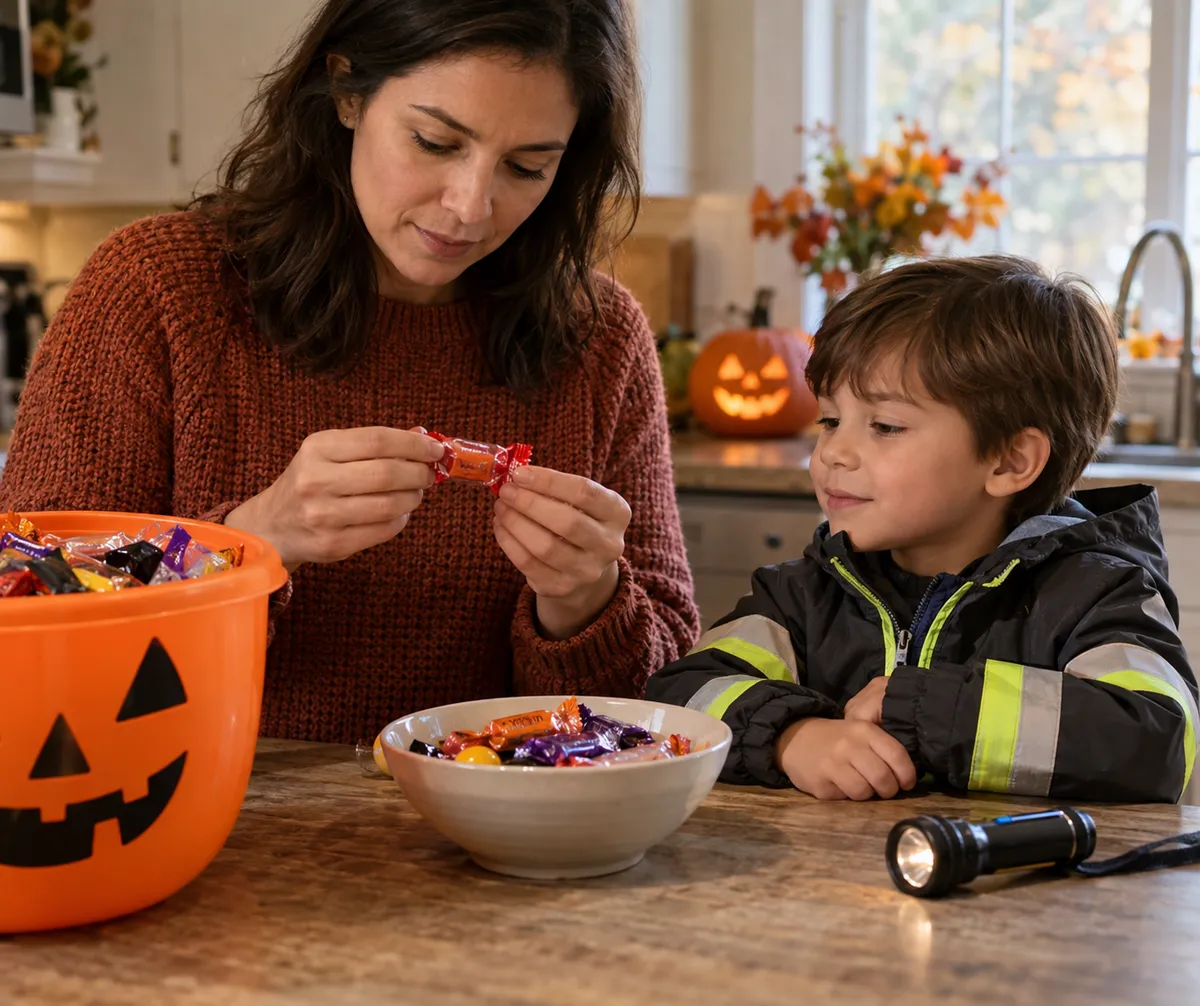
Checking candy is on the police list. Do it at home, at the table, before the first bite. Look through everything together, and set aside anything that looks opened, damaged, or unfamiliar. A simple rule helps: nothing gets eaten on the walk.
A Paleo-friendly plan for the haul (my suggestion)
This part is not from the police. Most trick-or-treat candy is refined sugar, dairy, and wheat, so if your family eats mostly Paleo, a plan helps avoid a standoff at the end of the night:
- Let each kid pick a small number of favorites to keep, and decide the number before you go.
- Offer a swap for the rest, such as a fruit-based treat or a small non-food prize.
- Serve a protein-heavy dinner before heading out so nobody is trick-or-treating hungry. A one-pan sausage and sweet potato dinner or a pot of soup can be ready in advance.
Consider a Daytime Option
Twin Falls Police are hosting a Public Safety Trunk-or-Treat, offered as a safer daytime alternative to walking neighborhoods after dark. If you live nearby, it removes most of the traffic and visibility worries. If you live elsewhere, check whether your local police department, school, or community groups run something similar; I can't confirm what's available outside Twin Falls.
The Two-Minute Door Check
Before you leave, run through it once: Can drivers see the costume? Is everyone warm? Does every young child have an adult? Is there a plan for the candy? If all four answers are yes, go have fun.