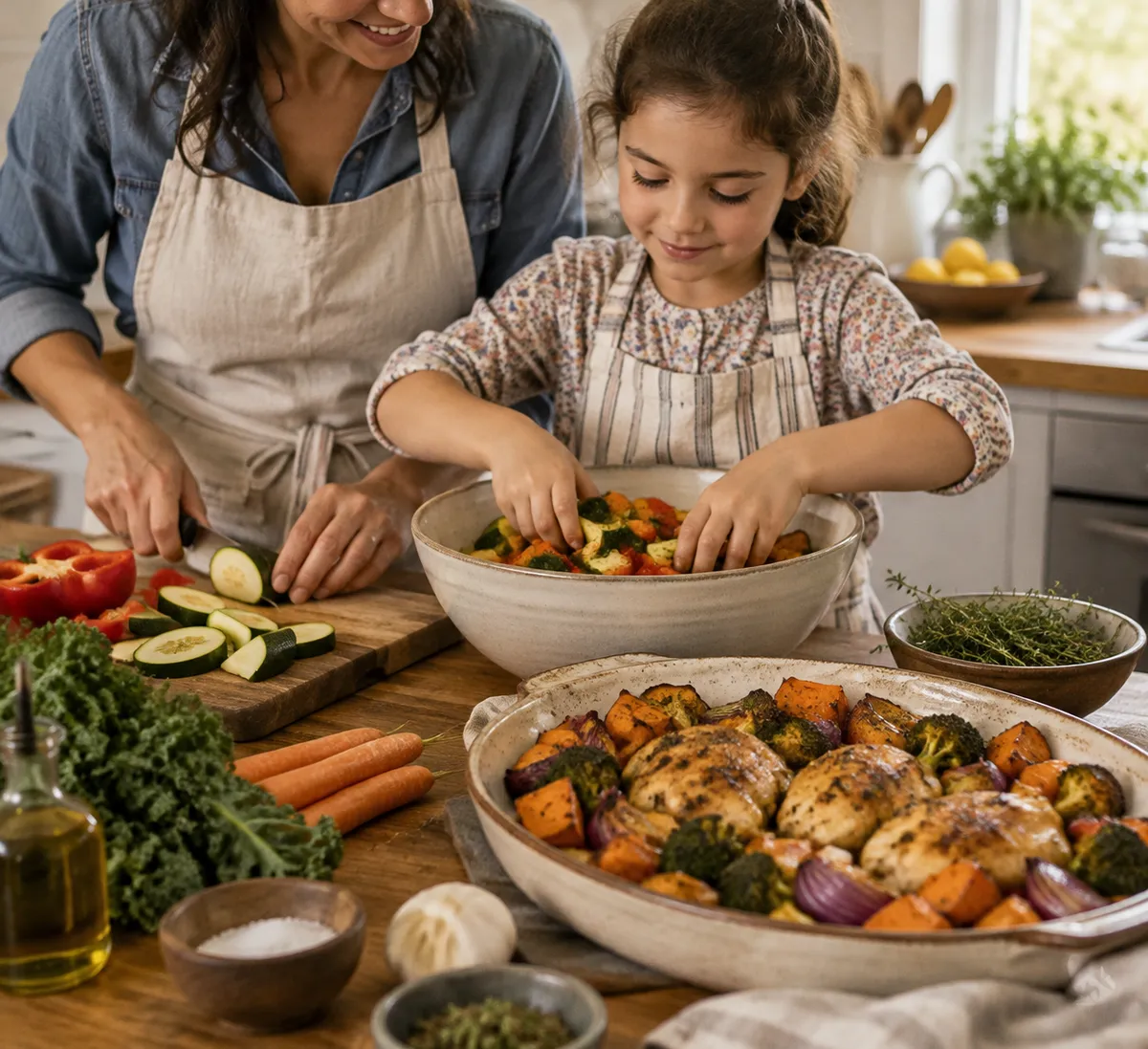
If your family has just left school for home education, dinner is probably not your first worry. But the kitchen may be the easiest place to ease into the new rhythm. By the end of this article, you'll have a few simple Paleo-style meals your kids can help make, plus a way to see the learning already happening around the stove.
Why the first weeks look messy
BBC guidance on home education describes "deschooling" as the adjustment period between leaving school and starting home education. Its main message is that rest, flexibility and curiosity-led discovery are normal and valuable parts of that transition. Education at home may not look like school, and the early messy phase can still be productive.
That matters for you in practical terms. If your child is tired or burnt out, you don't need a timetable on day one. You need a few gentle anchors in the day. Meals are natural ones, because they happen anyway.
The suggestions below are my own kitchen take on that idea, not advice from the BBC piece.
Let one meal a day be the anchor
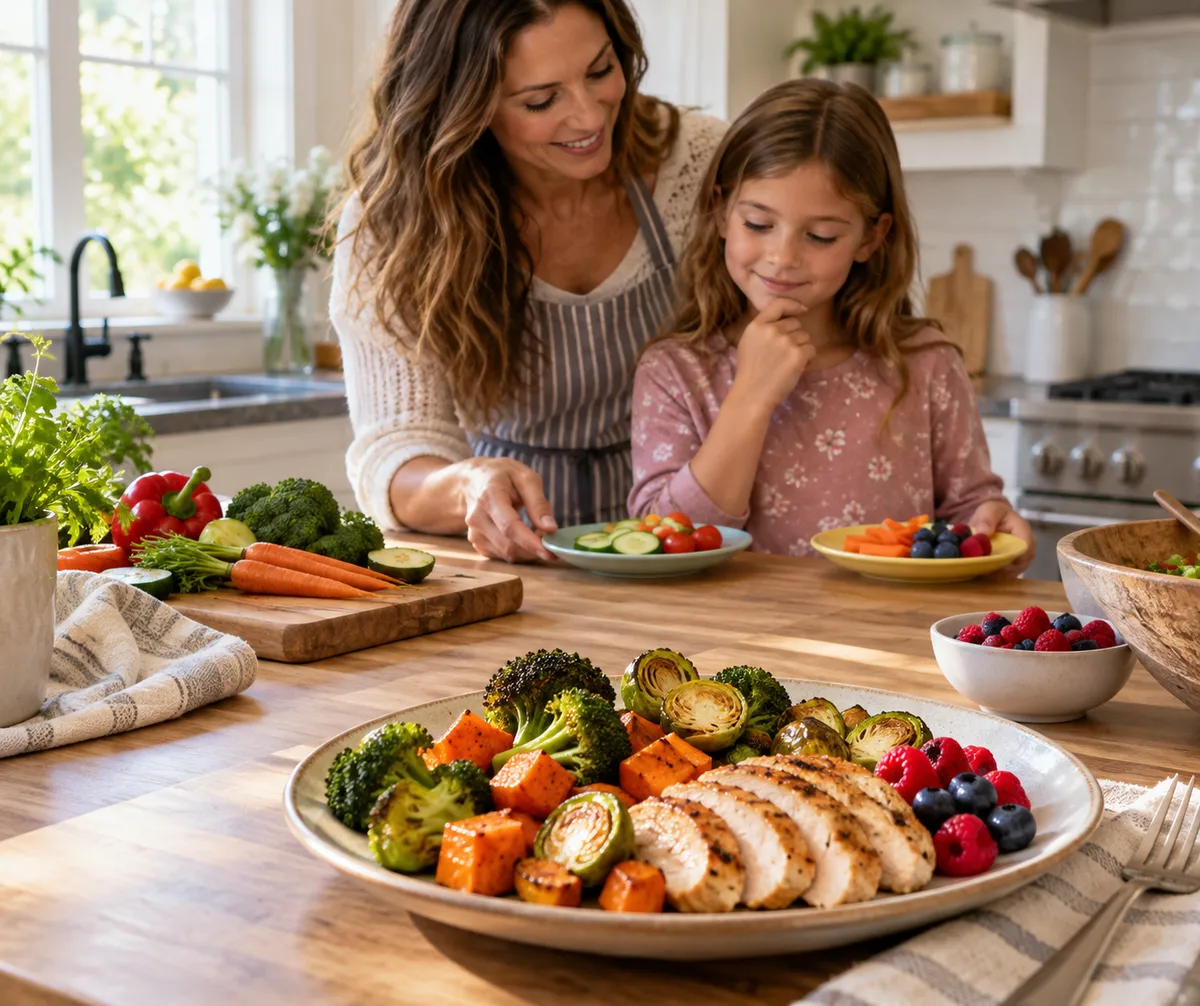
Pick one meal and make it the shared activity. Breakfast works well for a lot of families because nothing is riding on it. Cooking together gives the day a shape without recreating a school bell schedule.
Keep it loose. If your child wants to help on Monday and disappears on Tuesday, that's fine. The point is an open invitation, not a new set of expectations.
Three easy Paleo meals kids can help with
Two-ingredient banana pancakes
Mash one ripe banana with two eggs, then fry small spoonfuls in a little ghee or coconut oil until golden on both sides. Children can mash, crack and count. Serve with berries. They're small and forgiving, so a lopsided pancake still tastes fine.
One-pan sausage and veg tray bake
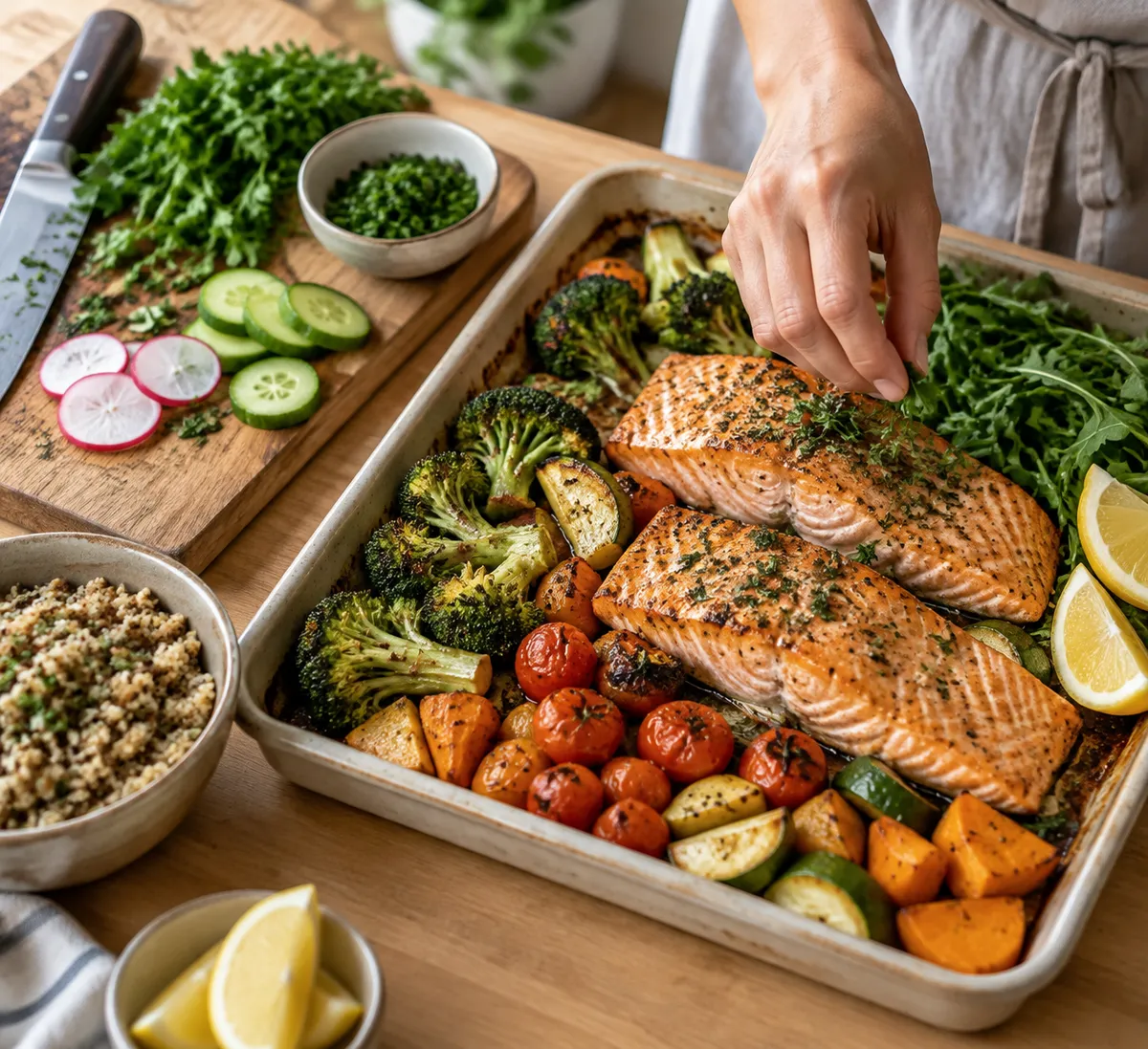
Chop sweet potato, peppers and red onion into similar-sized pieces and toss with olive oil and salt. Roast at about 200°C (400°F) with good-quality sausages (check labels for added sugar or fillers). Turn everything halfway. Younger kids can tear herbs and toss the tray. Older kids can handle the knife work and timing.
Batch-cook soup
Simmer chopped carrots, leeks, courgette and chicken thighs in stock until tender, then shred the chicken back in. One pot gives you lunches for several days, which takes pressure off your own energy while you're adjusting too. Let your child choose the vegetables from what's in the fridge.
Spot the learning already in the kitchen
One of the biggest worries for new home educators is whether they're "doing enough". Cooking is a reassuring place to look, because the learning is visible once you know where to see it. These are my observations, not a curriculum:
- Maths: Halving a recipe, weighing ingredients, counting out eight tray-bake pieces, or working out when the timer will go off.
- Reading: Following a recipe step by step, or reading a label to compare two products.
- Science: Watching batter set, noticing how onions soften, asking why the oven tray sizzles.
- Life skills: Planning a meal, shopping for it, cleaning up afterwards.
The BBC article encourages parents to observe their child's interests. Pay attention to which of these questions your child asks. A kid who keeps asking why the eggs puff up may be showing you a direction worth following.
Swap ingredients together
Paleo cooking comes with built-in questions. Why swap wheat flour for almond flour? What can stand in for sugar in a fruit dessert? Treat those as shared experiments rather than rules to enforce.
A simple starter: bake sliced apples with cinnamon and a spoonful of nut butter on top. Let your child decide whether it needs a drizzle of honey. Tasting and adjusting is a perfectly good afternoon activity, with no worksheet required.
Keep routines without recreating school
BBC guidance highlights flexibility, and kitchen routines can follow that. Some ideas that give structure without a classroom feel:
- One weekly planning chat. Ask each person to choose a meal for the week.
- One batch-cook session. Cook a big pot or tray together and portion lunches.
- One "free choice" meal. Your child picks anything, and you figure out a Paleo-friendly version together.
If you're connecting with other home-educating families, a shared cook-and-eat afternoon is a low-stakes way to meet people. Everyone brings an ingredient, and conversation happens naturally.
Go easy on yourself, too
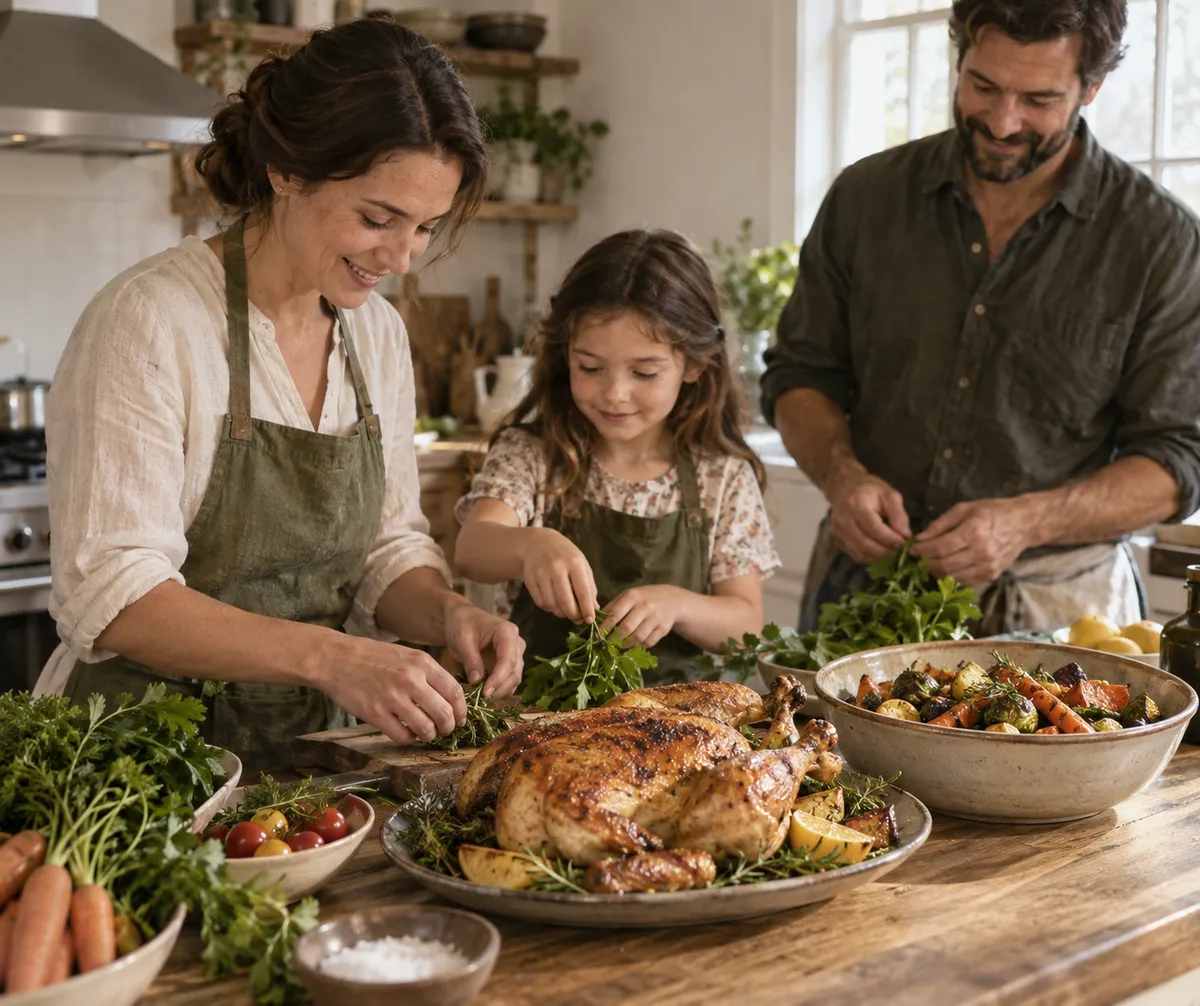
The transition is emotional for parents as well as children. You may feel pressure to prove everything is working. A pot of soup on the stove and a child asking questions over the chopping board is a decent sign that something is.
If cooking feels like one more demand, skip it. Rest is part of the process, according to the BBC guidance, and that goes for the grown-ups too. Fall back on a simple tray bake, and let the kitchen be a place you return to when you're ready.
Start here this week
Pick one meal, invite your child to help with one job, and don't grade the result. That's enough for a first week.