A recent CNN piece, "5 parenting tricks I use on myself," starts from a simple idea: the techniques a parent uses to head off a child's meltdown can work on adults too. The author's description says she's "stealing them for myself." The full list of five isn't something I can reproduce here, so I won't pretend to. But one angle from the piece's framing holds up in any kitchen: self-regulation starts with basic needs.
That's where food comes in. If you've ever snapped at someone because lunch was a coffee and half a granola bar, you already know the pattern. Here is a practical way to apply the idea: treat yourself the way you'd treat a tired four-year-old, and get something decent in front of yourself before things fall apart.
Step one: Notice the signs before the meltdown
With a kid, you learn the early signals: whining, clinginess, sudden irritability. Adults have their own versions. Maybe you get short with people, can't decide what to make for dinner, or feel a low-grade buzz of overwhelm. Per the CNN piece's framing, decision fatigue and overwhelm are exactly the moments these tricks are meant for.
My take, not the author's: before you try any mental technique, run a quick check. When did I last eat? Have I had water? Fixing those two things costs five minutes and often changes the whole picture.
Step two: Keep a "snack bag" for yourself
Parents carry snacks because a hungry kid is a predictable problem. Do the same for yourself. Stash one of these in your bag, car, or desk drawer:
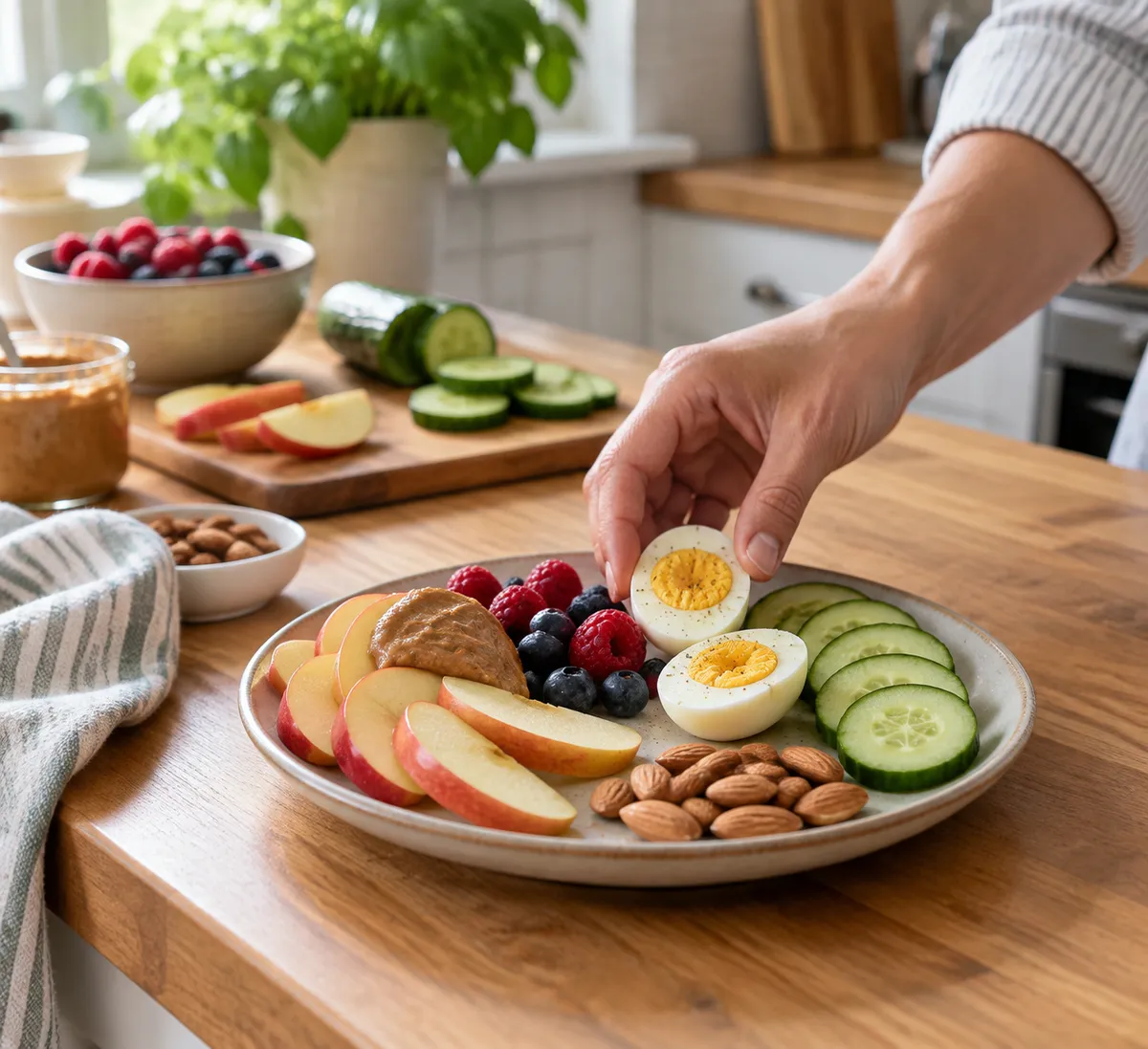
- Nuts and dried fruit: a small handful of almonds or walnuts with unsweetened dried apple or mango. Check labels for added sugar.
- Hard-boiled eggs: peel a few on Sunday and keep them in the fridge for grab-and-go protein.
- Meat sticks or jerky: look for versions with simple ingredient lists and no added sugar.
- Apple or banana with nut butter: single-serve packets travel well.
- Sliced veggies with guacamole: carrots, cucumber, and bell pepper hold up for hours in a container.
The point is not perfection. It's having something within reach so you don't wait until you're running on empty.
Step three: Take decisions off your plate
Decision fatigue is on the CNN piece's list of stress points. Food is one of the easiest places to cut decisions. Parents do this with toddlers by offering two choices instead of an open-ended "what do you want?" Try it on yourself.
Pick a default for each meal
- Breakfast: scrambled eggs with spinach and leftover roasted sweet potato.
- Lunch: a big salad topped with canned salmon or leftover chicken, olive oil, and lemon.
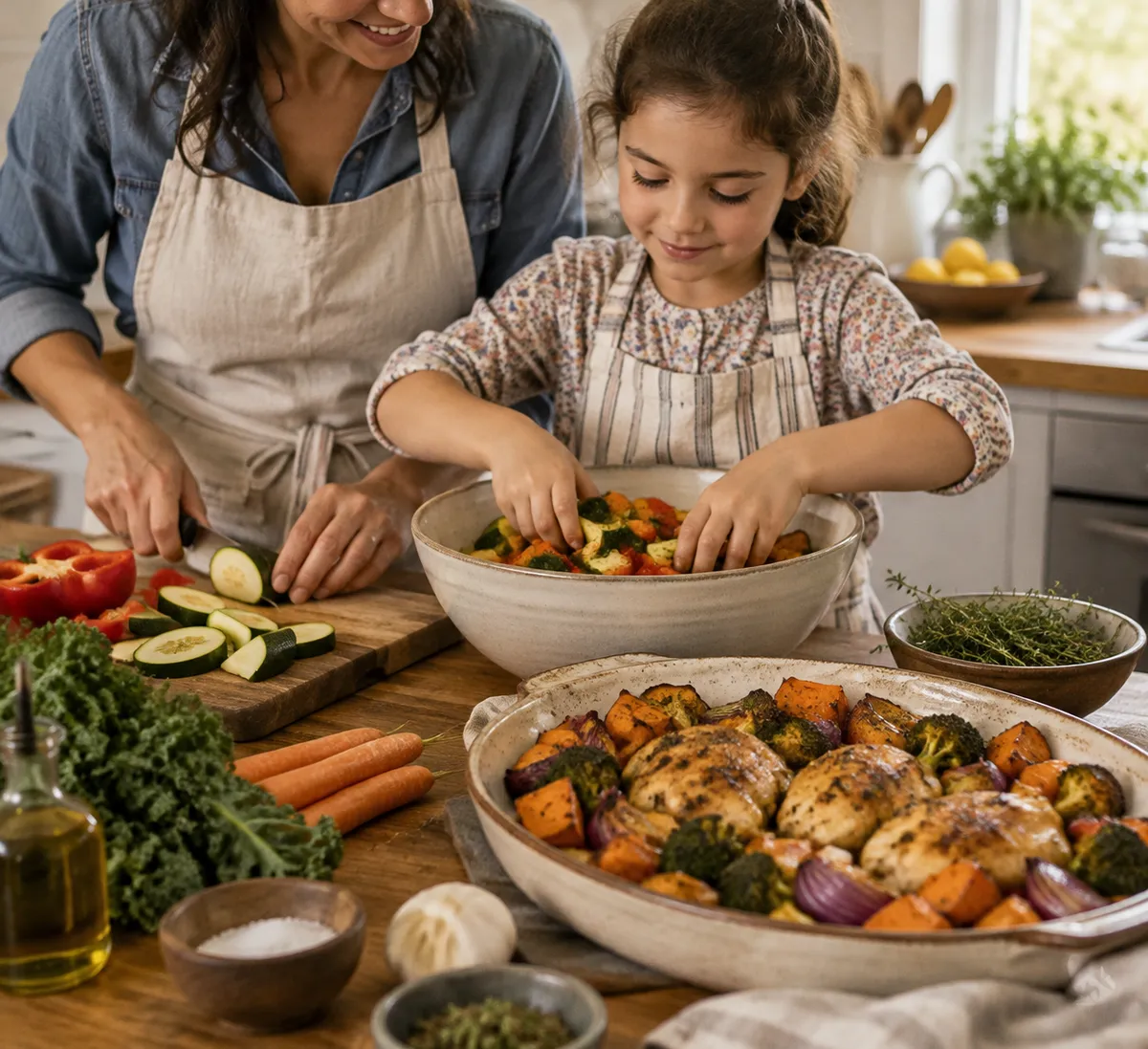
- Dinner: a one-pan sheet tray of chicken thighs, broccoli, and diced squash.
You don't have to eat the same thing daily. Just have a fallback so a rough day doesn't end in a blank stare at the fridge.
Batch one thing on the weekend
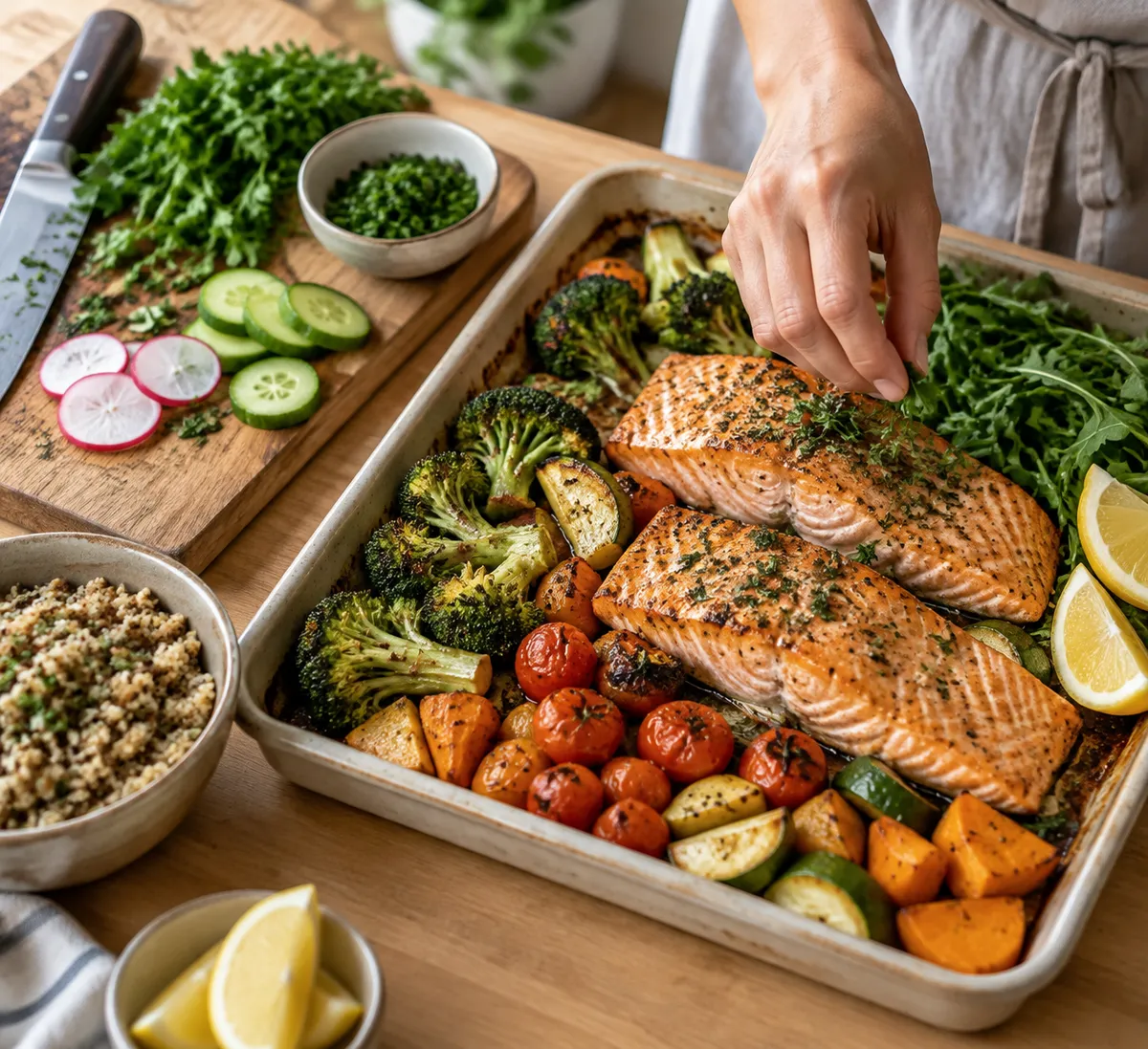
Cook a pot of soup, a tray of roasted vegetables, or a dozen hard-boiled eggs. One batch covers several meals and removes the "what's for dinner" spiral on your hardest evening.
Step four: Build a calm-down meal, not a calm-down excuse
When a child melts down, a parent often offers comfort first, then solutions. You can do the same: a warm, simple meal is a form of comfort that also happens to feed you. A few easy options:
- Eggs in a bowl: soft-scrambled eggs over sautéed greens, ready in under ten minutes.
- Quick chicken soup: simmer broth with shredded rotisserie chicken, carrots, and celery.
- Baked fruit: slice an apple, sprinkle with cinnamon, and bake until soft for a gentle, naturally sweet treat.
None of these require a recipe you have to concentrate on. That matters when you're already stretched.
Step five: Talk to yourself like a patient parent
One of the angles floated for this topic is spending a day talking to yourself the way a patient parent would. Applied to food, that means dropping the scolding. Skipped lunch? You don't need a lecture. Say, in effect, "you're hungry, let's fix that," and eat the snack from your bag.
This is my suggestion rather than something quoted from the CNN article, but it fits the premise: kindness and practicality tend to work better than shame, whether you're four or forty.
A simple weekly setup
If you want to put this together in about an hour on a weekend:
- Boil six eggs.
- Roast one sheet pan of mixed vegetables.
- Cook a batch of chicken thighs.
- Portion nuts and dried fruit into four small containers.
- Wash and chop carrots and cucumbers for dipping.
That gives you protein, vegetables, and snacks for most of the week, with no decisions left to make when you're tired.
The takeaway
Before you reach for any technique for managing stress, ask the question you'd ask a cranky child: have you eaten, and have you had water? Put a snack in your bag tonight and make that the first thing you check tomorrow.