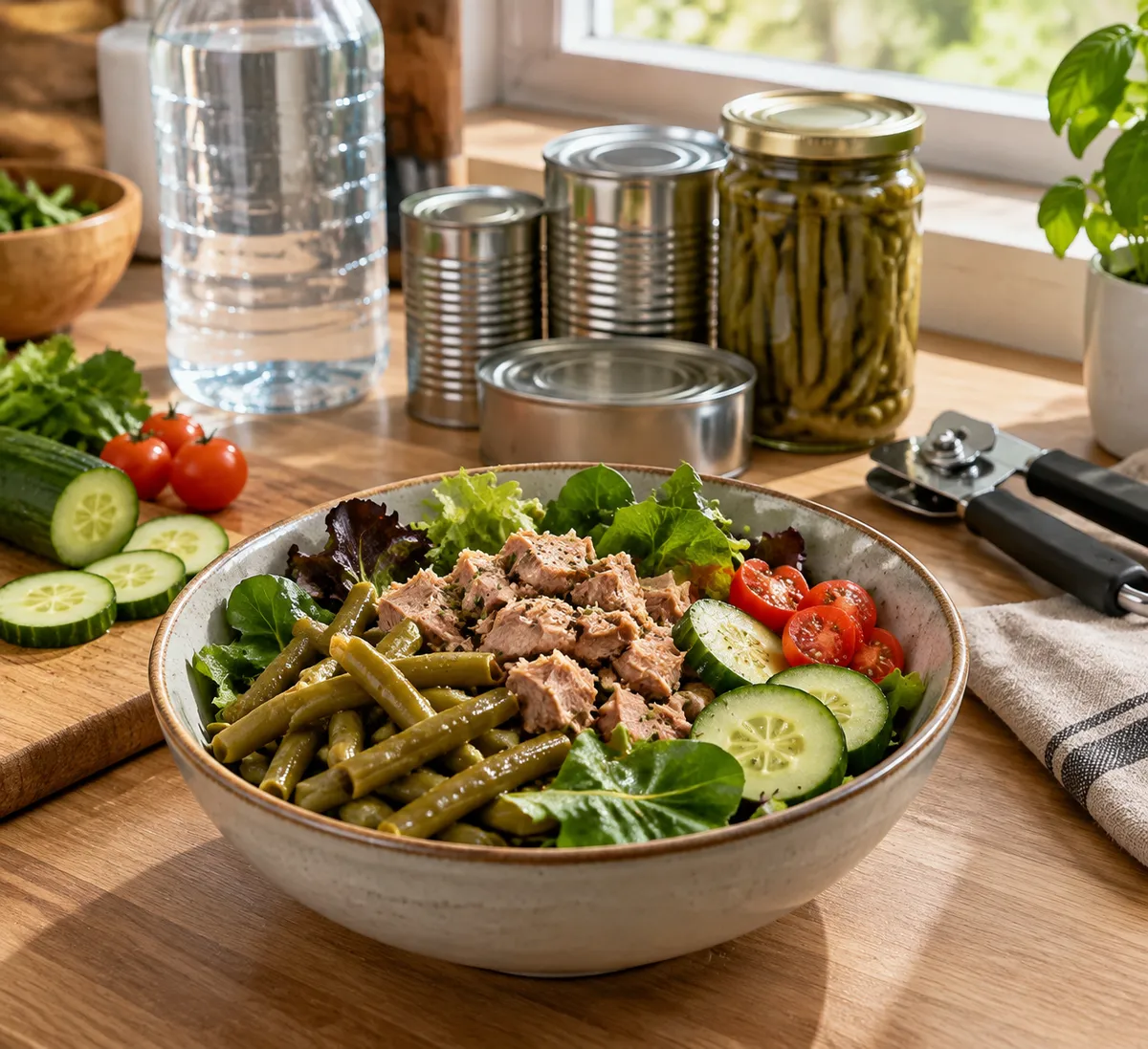
A UK government watchdog has said homes in the UK aren't prepared for possible food supply disruptions caused by events like cyberattacks, power outages, disease outbreaks or extreme weather, as reported by Medicalxpress. You don't need to panic about that. You do need a plan, and if you eat Paleo-style, a little extra thought, because the default advice ("stock nonperishable food") is vague and tends to lean on refined, shelf-stable carbs.
Here's how to build an emergency pantry that keeps you nourished, fits a Paleo-inspired way of eating as far as practical, and doesn't feel grim to eat from.
A note on scope: the guidance behind this piece calls for balanced protein, whole-grain carbohydrates, canned vegetables, water, supplements and practical tools like a can opener. Whole grains aren't Paleo, so I've flagged swaps below. The structure is the source's; the Paleo adjustments are my own suggestions.
Start with the overlooked basics
These are the items people forget, and they matter as much as the food.
Water
Water is on the list for a reason: without power, you may have fewer ways to get safe drinking water. Store it before you need it, and don't treat it as an afterthought to the food.
A manual can opener
Canned food is the backbone of most emergency pantries. A can opener is on the recommended list for a simple reason: if you can't open the cans, you can't eat. Buy a manual one and keep it with the food, not in the kitchen drawer you might not reach.
A multivitamin
Supplements are part of the recommended list. When fresh produce runs out, a basic multivitamin is a cheap backstop. Think of it as insurance, not a replacement for real meals.
Build your protein shelf
Protein keeps you full and is the easiest category to stock Paleo-style. Good shelf-stable options:
- Canned fish such as salmon, sardines, mackerel and tuna
- Canned chicken
- Jerky or meat sticks with short ingredient lists (check for added sugar)
- Nut and seed butters, plus whole nuts and seeds
A practical way to shop: aim for a mix, so you aren't eating tuna three meals a day. Choose varieties packed in water or olive oil, and check labels for salt, since the source flags too much salt as a common emergency-food mistake.
Swap the grains, keep the energy
The guidance recommends whole-grain carbohydrates for sustained energy and fiber. If you avoid grains, you can get shelf-stable carbohydrates and fiber from other places:
- Canned or pouched sweet potatoes and pumpkin
- Dried fruit with no added sugar
- Plantain chips or cassava-based crackers (check ingredients)
- Canned coconut milk for calories and richness
- Nuts and seeds for fiber and fat
If you're flexible rather than strict, oats or brown rice are cheap, store well and stretch a budget. Decide based on your own diet; the point is having a dependable energy source that isn't just sugary snacks.
Don't skip the vegetables
Canned vegetables are on the recommended list, and they're what keep an emergency pantry from becoming all beige. Stock:
- Canned tomatoes (diced, crushed, paste)
- Canned or jarred roasted peppers and artichokes
- Canned green beans, carrots, spinach or mushrooms
- Canned pumpkin
Look for no-salt-added versions where you can, or rinse and drain regular ones. Salt creeps up fast when everything comes from a can, so this one habit helps a lot.
Turn the shelf into actual meals
A pile of cans isn't a plan. Here are three templates that need little or no cooking equipment. Adjust them to whatever you've stocked.
Salmon and sweet potato bowl
Mash canned or pouched sweet potato, top with canned salmon, a squeeze of lemon if you have it, and olive oil.
Tomato and chicken skillet soup
Heat canned tomatoes with canned chicken, canned vegetables and whatever dried herbs and spices you keep. It's a one-pot meal that works on a camp stove.
Sardine and veg plate
Sardines, roasted peppers, artichokes and a handful of nuts. No heating required, which matters if the power is out.
Keep a small stash of dried herbs, spices, olive oil and vinegar. They cost little, last a long time and are what make canned food taste like dinner.
Avoid the common mistakes
- Too much salt. Canned and processed foods run salty. Read labels and rinse vegetables.
- Not enough fiber. Emergency stockpiles often skew toward refined carbs. Include vegetables, fruit, nuts, seeds and, if you eat them, whole grains or legumes.
- Stocking food you don't eat. If your family won't eat it now, they won't eat it in a crisis. Buy foods you already like.
- Forgetting the tools. Can opener, water, and a way to store everything dry and organized.
Make it affordable and low-stress
You don't have to buy everything at once. Add three or four items to each weekly shop until the shelf fills out. Rotate older cans to the front and use them in regular cooking, so nothing goes to waste. Treated this way, an emergency pantry is just a well-stocked pantry that happens to cover you when things go wrong.
Your next step
This week, check your cupboard for three things: drinkable water, a working manual can opener and one shelf-stable protein you'd happily eat. Fill any gap, then add one new item with every shop after that.