Gummy, clumped, or unevenly cooked rice is one of the most common kitchen frustrations, and the fixes are small. By the end of this guide, you'll know which rice steps matter, which ones depend on the variety, and what to do when a pot goes wrong.
The advice comes from chefs quoted by Fox News, who point to a short list of mistakes: skipping the rinse, using one method for every type of rice, stirring while it cooks, and fluffing too aggressively. A note for Paleo readers: strict Paleo usually leaves out grains, including rice. Many people following a Paleo-inspired approach still serve rice occasionally, for family meals, guests, or a flexible "Beyond Basic" week. Cauliflower rice is the grain-free swap, and some of these habits carry over. If rice is on your table, here's how to get it right.
The step most home cooks skip: rinsing
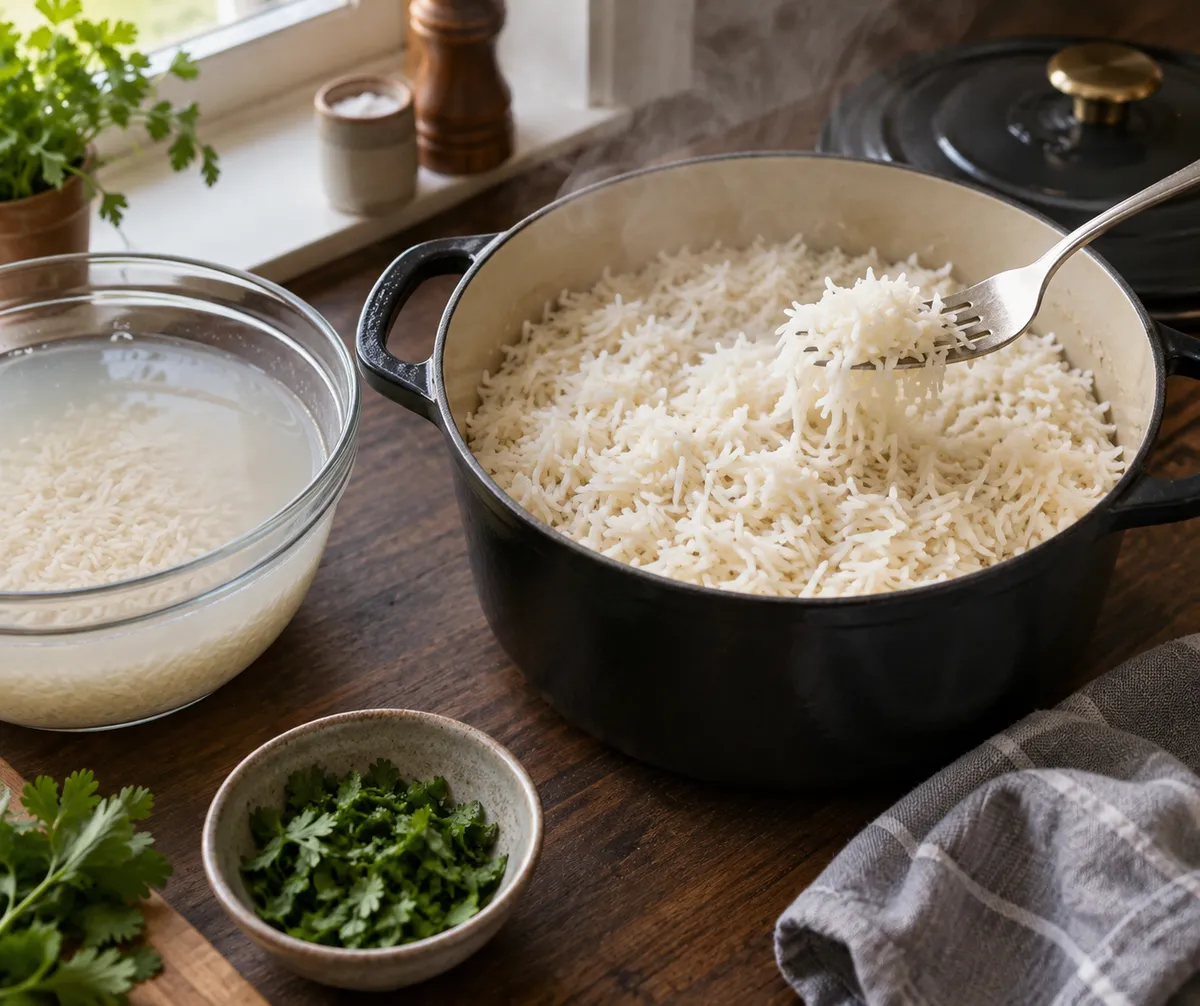
Per Fox News, chefs say rinsing basmati and jasmine rice before cooking is key to fluffy, distinct grains that don't clump in the pot. The idea is simple: rinsing helps keep the grains separate instead of letting them stick together.
A practical way to do it: put the rice in a bowl or fine strainer, run cool water over it, and drain. Repeat until the water looks clearer. That's a habit, not an exact number from the chefs, so use your eyes.
Don't use one method for every rice
The chefs stress that rinsing, soaking, water ratios, resting, and gentle fluffing all depend on the rice variety and the texture you want. Fluffy, separate grains are the goal for basmati and jasmine. Other dishes may call for something stickier or creamier, and that changes the approach.
So before you cook, decide what you're making:
- Fluffy side dish (basmati, jasmine): rinse, and follow the water ratio for that variety.
- Something creamier or stickier: check the method for that specific rice rather than copying the fluffy-rice routine.
The takeaway: read the package, and treat its water ratio as variety-specific rather than universal.
Leave it alone: why stirring hurts
Stirring during cooking is on the chefs' list of mistakes. Fox News reports that stirring can ruin the texture. Once the lid is on and the heat is set, resist the urge to poke at it. Every lift of the lid and every pass of the spoon works against the distinct grains you're after.
Let it rest
Resting is part of the process, not an optional extra. The chefs list it alongside rinsing, soaking, and water ratios as steps that shape the final result. Practically, that means taking the pot off the heat and giving the rice time before you open it. Follow the timing for your variety rather than guessing.
Fluff gently
Fluffing too aggressively is the last common error. Use a fork or a light hand and lift the grains rather than mashing or churning them. Gentle fluffing keeps the grains whole and separate.
Quick fixes for common problems
The chefs' mistakes map neatly onto the usual symptoms. I'm connecting these dots myself, so treat them as reasonable starting points rather than chef-confirmed diagnoses:
- Clumpy or gummy: you may have skipped the rinse, stirred during cooking, or fluffed too hard. Fix those first next time.
- Wrong texture for the dish: you may have used a method meant for a different rice. Match the technique to the variety.
- Undercooked or uneven: check the water ratio and resting step for your specific rice.
A Paleo-friendly way to use these habits
If you cook rice for family members who aren't eating Paleo, or you're building a flexible weekly menu, the same discipline helps. Make one pot, cook it correctly, and keep it separate from the Paleo-friendly proteins and vegetables everyone shares. For your own plate, cauliflower rice is the common grain-free swap. Like regular rice, it tends to turn out better when you don't overwork it, though that tip is mine, not the chefs'.
Your next pot
Next time you cook basmati or jasmine, change just three things: rinse until the water runs clearer, keep your spoon out of the pot while it cooks, and fluff gently after it rests. One batch will show you the difference.