Kids melt down. It happens at the dinner table, in the car, and right as you are plating something you spent twenty minutes cooking. Self-regulation, the ability to manage emotions and adjust behavior under stress on your own, is a skill young children naturally lack. The good news, per a roundup from Parents, is that you can help them build it. Here are seven strategies psychologists recommend, with practical ways to use them in a busy family kitchen and beyond.
A quick note on fit: this is a family-focused piece, not a recipe. But mealtimes are where many parents see big feelings first, so the examples lean that way.
1. Teach Kids to Recognize Their Emotions
A child can't manage a feeling they can't name. Start by giving them words: mad, nervous, disappointed, frustrated, excited.
Try this:
- Name the feeling out loud in the moment: "You seem frustrated that dinner isn't ready yet."
- Ask where they feel it. Tight fists, hot face, or a wobbly stomach all count.
- Practice when everyone is calm, not only during a meltdown.
Naming gives kids a handle on the feeling before it takes over.
2. Model Calm Behavior
Kids watch how you handle stress. When the sauce burns or you are running late, let them see you handle it out loud: "I'm feeling stressed. I'm going to take a breath and then fix this."
You don't have to be perfect. Showing your own process, including the recovery, teaches more than telling them to calm down ever will.
3. Practice Deep Breathing
Deep breathing is one of the most accessible tools on the list. The key is practicing it when nobody is upset, so it feels familiar when emotions run high.
Keep it simple and playful:
- Smell the flower, blow out the candle: a slow breath in through the nose, a slow breath out through the mouth.
- Do a few rounds together before meals or at bedtime.
- Let your child pick the imagery so it feels like theirs.
4. Create a Calming Routine
Predictable routines help kids feel steady. A short, repeatable sequence they can lean on when they are overwhelmed works well: a few breaths, a drink of water, a quiet minute.
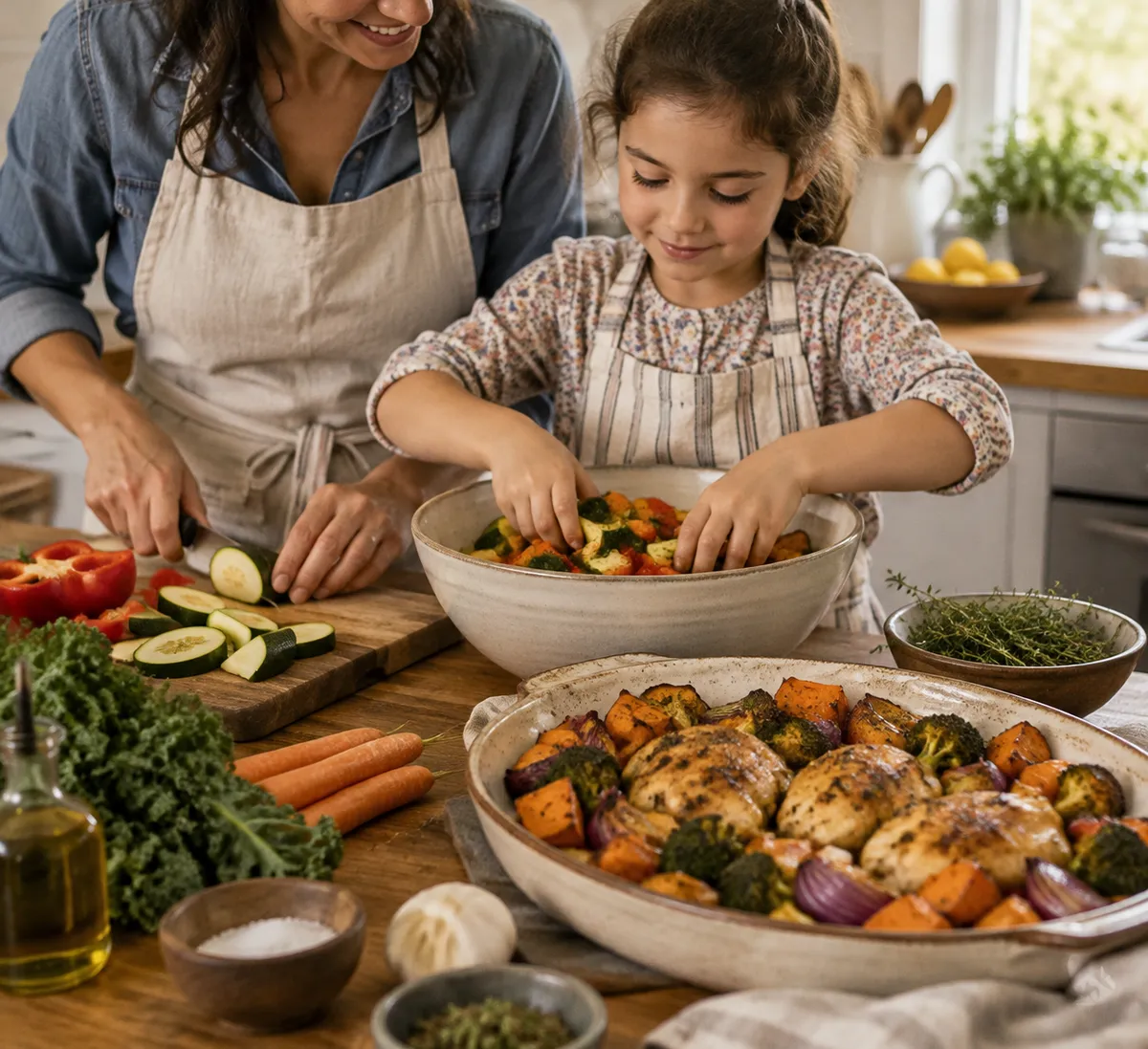
Routines also help outside of meltdowns. A consistent rhythm around meals, homework, and bedtime lowers the number of stress spikes in the first place. If your family batch cooks on Sundays, let kids help with a task. Familiar, predictable jobs can be calming.
5. Use Sensory Tools
Sensory tools give a child's body something to do while their feelings settle. Think of items like a soft fabric, a squeeze toy, or a cozy blanket. What works varies by child, so offer a few and notice which one they reach for.
Keep the tools somewhere easy to get to. A small basket near the kitchen or in the car means you can offer one right when it's needed.
6. Set Clear Expectations
Many blowups come from surprises. Tell kids what is coming and what you expect before the moment arrives.
Examples:
- "We're going to the store. We're buying what's on the list, and there won't be a snack aisle stop today."
- "Dinner is in ten minutes. You can help set the table while you wait."
- "If you feel upset, you can use your breathing or take a quiet minute."
Clear, calm expectations give children a map, and they know what to do when things get hard.
7. Praise Self-Regulation Efforts
When your child pauses, breathes, or uses words instead of yelling, say so. Be specific: "You were really upset and you took a breath before you answered. That was hard, and you did it."
Praise the effort, not just a perfect result. Kids repeat what gets noticed, and this builds confidence that they can handle big feelings.
Putting It Together: Before, During, and After
These seven ideas work best as a loop rather than a checklist.
Before
Practice breathing, name feelings during calm moments, set expectations, and keep sensory tools handy.
During
Stay calm yourself, name the feeling, and offer a tool or the calming routine. This is not the moment for a long lesson.
After
Once everyone has settled, praise any effort you saw and talk briefly about what happened. That is where the learning sticks.
Why Parents Are Focused on This Now
Per the Parents roundup, caregivers are increasingly looking for practical emotional-regulation tools as kids deal with stress from school, screens, social pressure, and busy routines. Self-regulation is a growing focus in parenting, education, and child development conversations.
Start With One
You don't need to roll out all seven at once. Pick one this week, probably breathing or naming feelings, and practice it at a calm moment before your next hard one arrives.