Halloween is coming, and a short checklist now can make trick-or-treat night safer for your kids. This guide covers three things: how to keep kids visible on the street, how to screen candy for choking hazards, and what to do (and not do) if a child starts choking.
The guidance comes from a Health Check Kids segment reported by Turnto10, which makes a point many parents don't expect: pedestrian safety may be a bigger risk on Halloween than candy tampering. That shapes the order of this checklist.
Start With the Street, Not the Candy
More kids are walking in the dark on Halloween, often in costumes that reduce visibility. Per Turnto10's report, that combination is the bigger concern, so put your first effort here.
Some practical steps that follow from that:
- Check the costume for visibility. Can your child be seen easily from a distance after dark? If the costume is dark, think about what you can add to it.
- Check what the costume blocks. Masks and headpieces that limit what a child can see work against pedestrian safety. Try the costume on before the big night and look around in it.
- Walk with younger kids. Kids aged 4 to 11 are the audience this guidance targets, and they are exactly the kids who get distracted and excited near streets.
These are common-sense measures rather than quotes from the report, but they follow directly from its core warning: dark streets plus low-visibility costumes.
Screen Candy for Choking Hazards
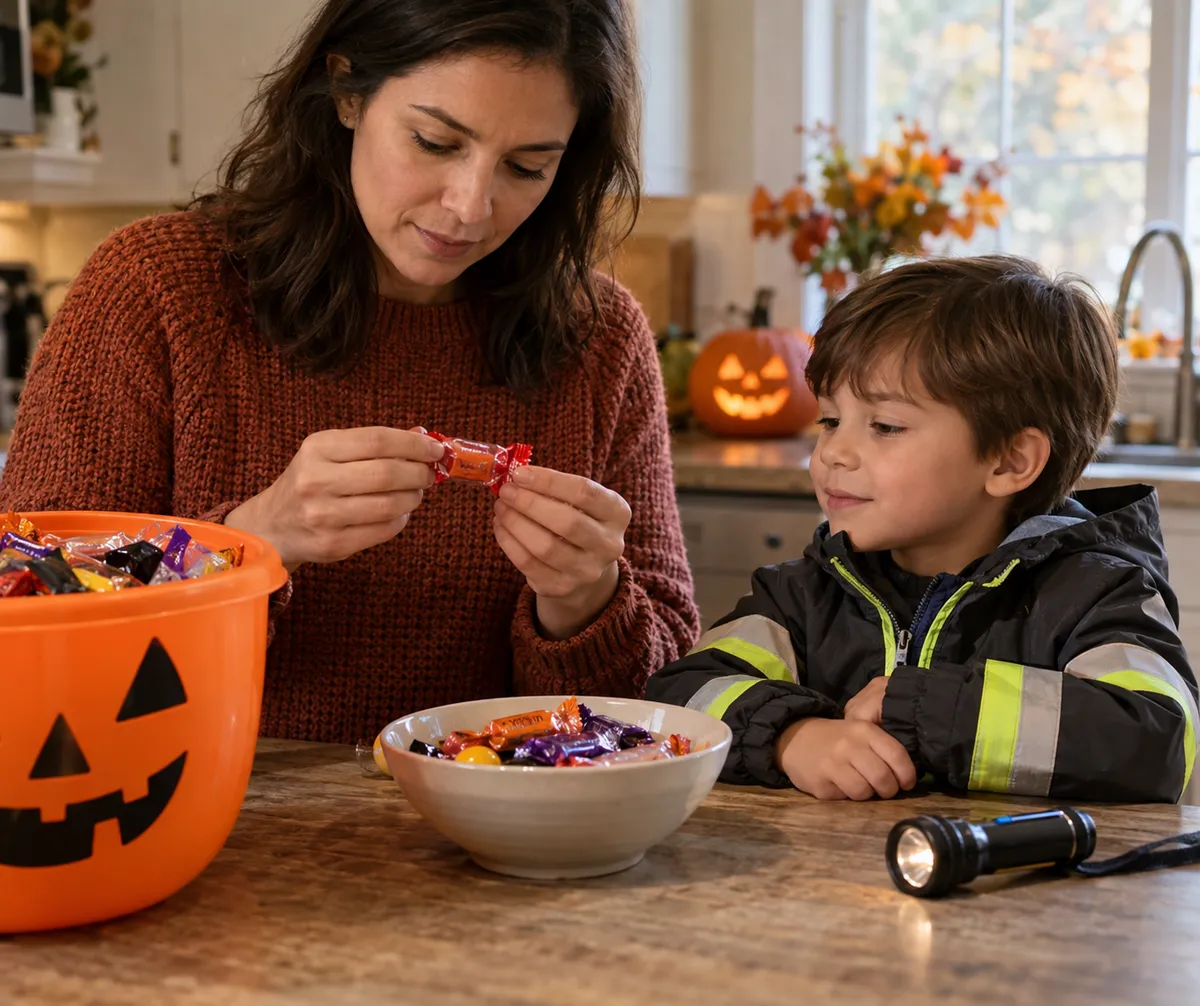
The report also asks parents to learn to spot choking hazards in Halloween candy and to think about what's age-appropriate for each child. Once the bags come home, do a sort before anyone starts eating.
A simple sorting routine
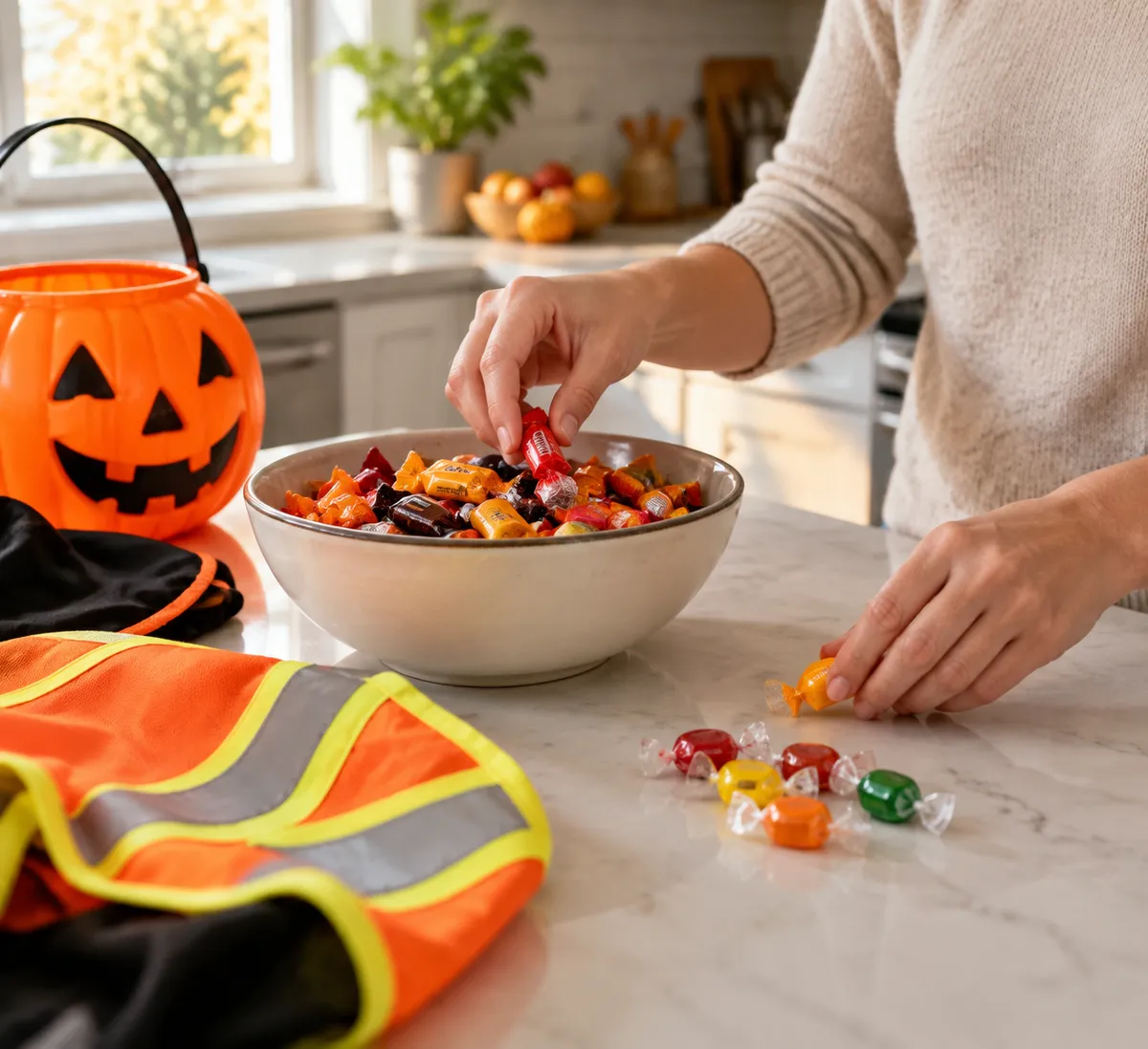
- Dump each child's haul out on the table.
- Set aside anything that's wrong for that child's age, especially for your youngest.
- Let older siblings keep their own candy separate from the little one's.
- Keep the set-aside pile out of reach rather than just out of sight.
The separation step matters in a house with mixed ages. A candy that is fine for an 11-year-old can be a problem for a younger sibling who grabs it from the counter.
A Paleo-friendly side note
If your family leans Paleo, this sort is also a good moment to offer a trade. Let kids swap part of their haul for a fruit-based treat you've made at home. It's an easy way to cut the pile down, though it's a suggestion of ours, not part of the safety guidance.
If a Child Chokes: What to Do
Turnto10's segment covers how to respond if a child is choking on candy. The exact first-aid steps vary by the child's age, so the best preparation is to take a certified first aid or CPR course, or ask your pediatrician where to find one. Reading about it is no substitute for hands-on practice.
What the report does stress are the mistakes to avoid, and these are worth memorizing.
Don't give the child water
It can feel natural to hand over a drink to wash something down. The guidance flags this as a common mistake when a child is actually choking.
Don't blindly reach into the mouth
Sweeping a finger into a child's mouth without seeing the object is another error the report warns about. Reaching in blind risks pushing the object further down.
A Quick Pre-Halloween Checklist
Print this or save it to your phone.
Before you leave
- Costume tried on and checked for visibility in low light
- Masks and headwear checked so they don't block your child's view
- An adult assigned to walk with younger children
When you get home
- Candy sorted by age-appropriateness
- Hazardous pieces set aside for younger kids
- Everyone at home knows not to give water or reach blindly into the mouth of a choking child
The One Thing to Do This Week
Sign up for a first aid or CPR class, or at least find one near you, before October 31. Everything else on this list takes minutes. Knowing how to respond calmly in an emergency is the piece you can't improvise.