Moneycontrol recently ran a piece on five timeless parenting lessons inspired by Sudha Murty, aimed at raising grounded, value-driven children. Its premise is that parents are dealing with screen-heavy routines, competition, and consumer culture, and want simple, values-based guidance. We won't retell its five lessons here. This article takes the same goal and puts it where many families spend their best hour of the day: the kitchen and the dinner table.
Below are six Paleo-friendly habits that teach gratitude, empathy, and humility while getting dinner done. They are my suggestions, not claims from that article. None needs special equipment.
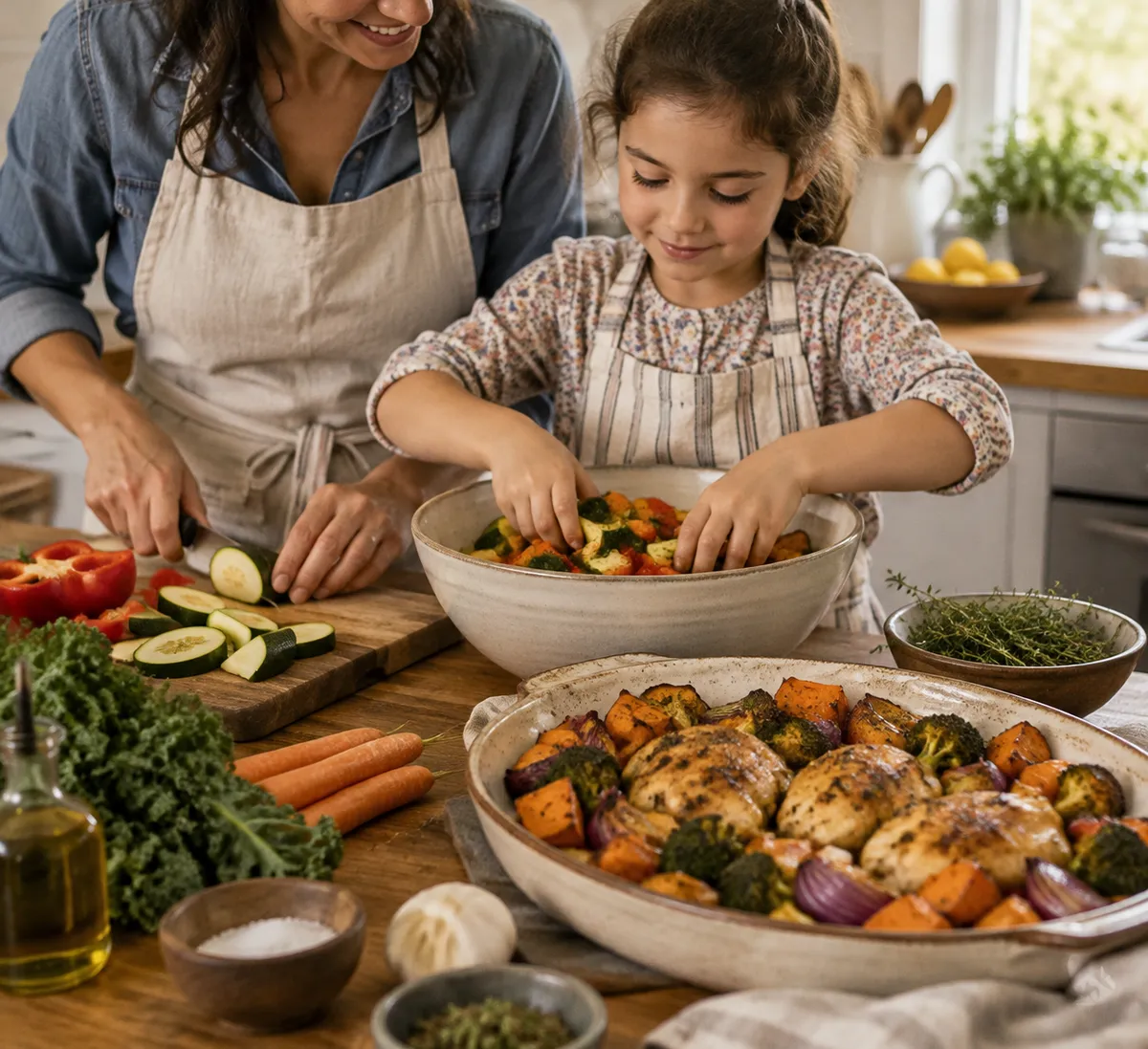
Give every child a real job in dinner
Grounded kids tend to be kids who know where things come from and what effort they take. Cooking makes that visible.
Match the job to the age:
- Ages 4-6: Wash vegetables, tear salad greens, crack eggs into a bowl, stir batter.
- Ages 7-9: Peel carrots or sweet potatoes with a peeler, measure spices, mash avocado, set the table.
- Ages 10-11: Chop soft vegetables with supervision, run the sheet pan, and own one full side dish each week.
The rule that matters: the job is real. If nobody would notice when it's skipped, kids notice that too.
Make one one-pan dinner the kids "own"
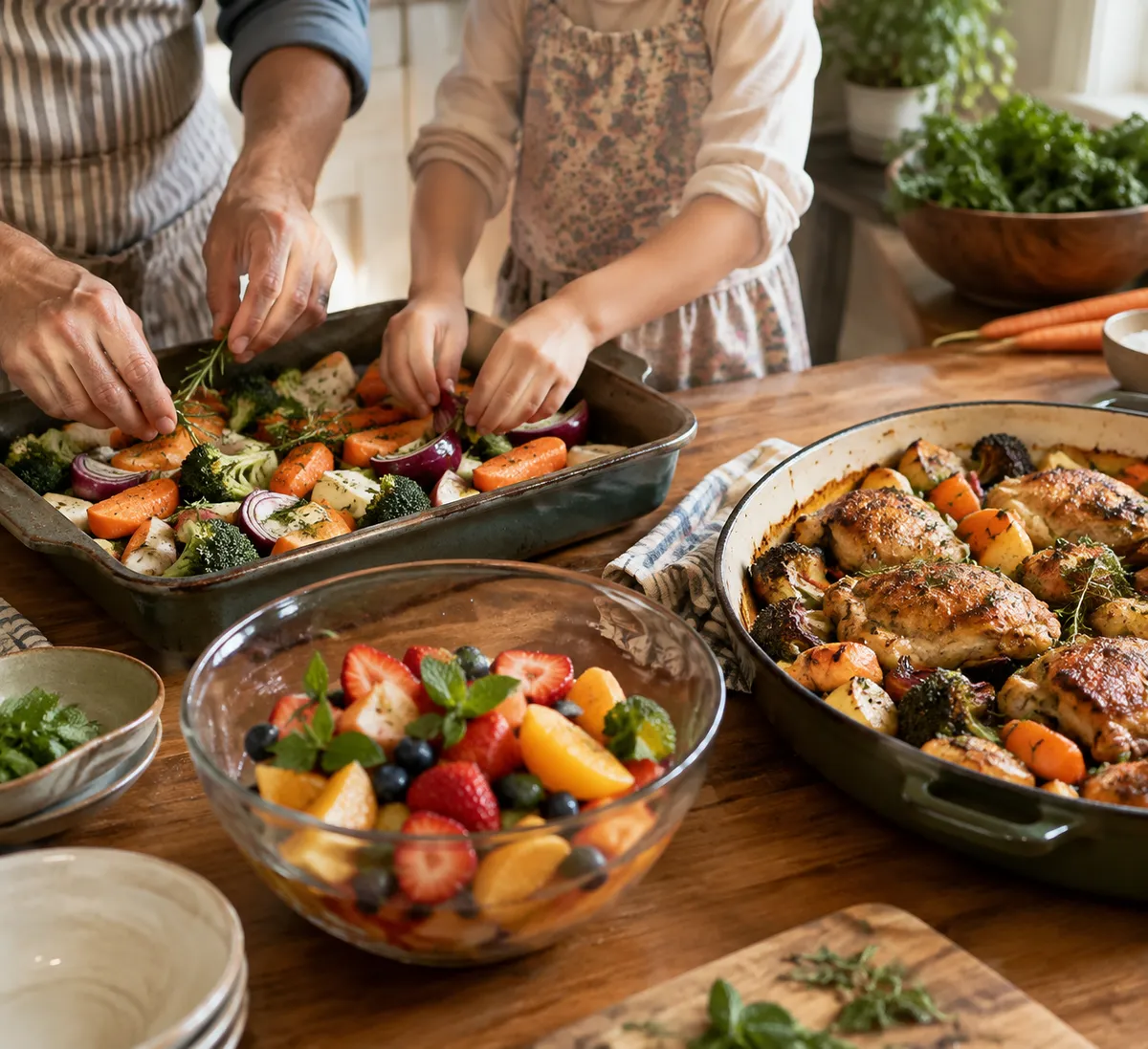
One-pan meals keep cleanup small, which means you're more likely to let kids help. Here's a template that works with whatever is in season.
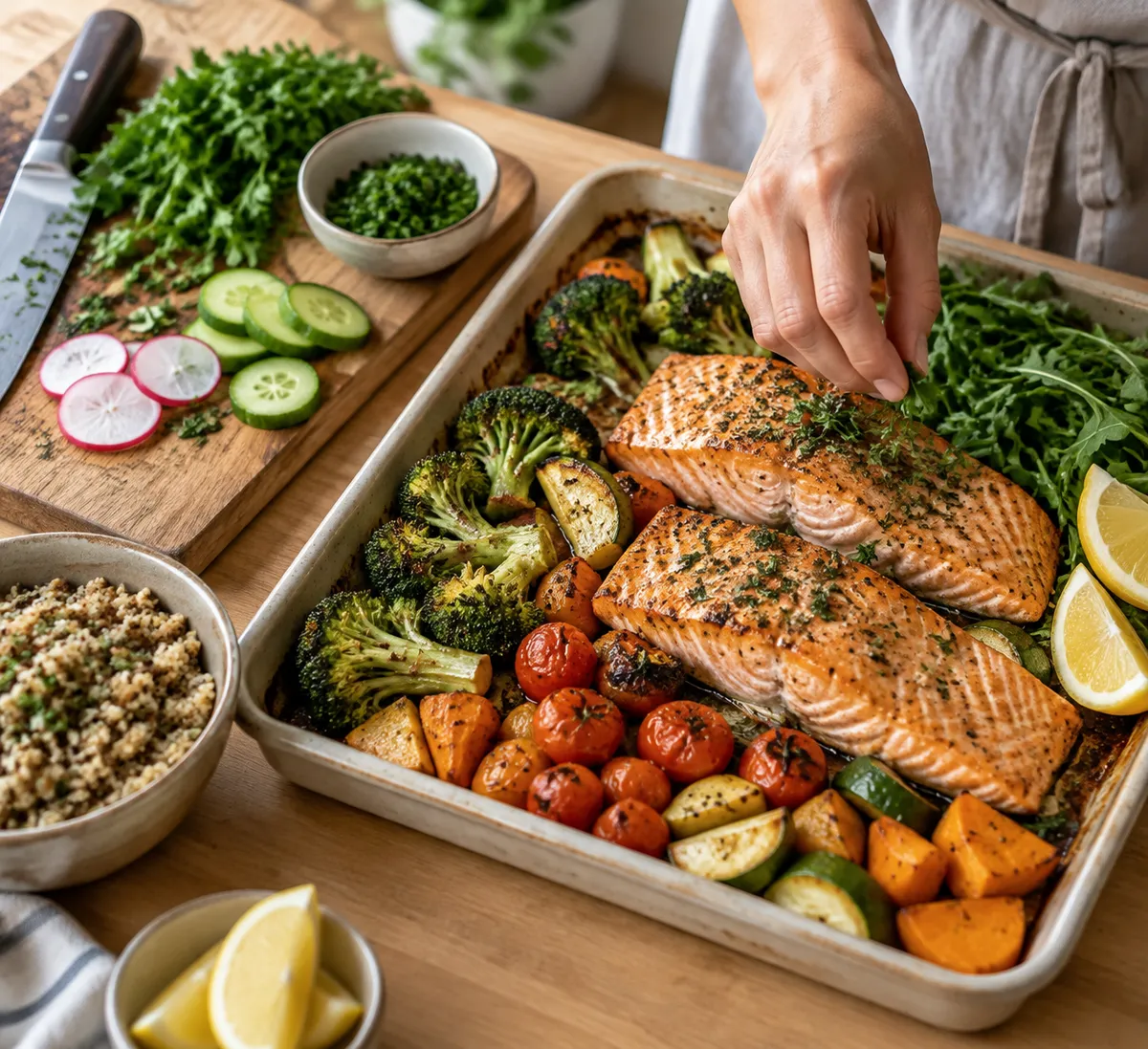
The sheet-pan template
- Heat the oven to 425°F (220°C).
- Cut 1 to 1.5 pounds of sweet potato, carrots, or squash into even, bite-sized pieces. Toss with 2 tablespoons olive oil or avocado oil and salt.
- Roast for 15 minutes.
- Add chicken thighs (or sausages, or salmon fillets) and a tray of broccoli or green beans. Season with garlic powder, paprika, or whatever your kid picks from the spice shelf.
- Roast 20 to 25 minutes more, until the chicken reaches 165°F (74°C).
Let a child choose the vegetable and the spice each week. Choice builds ownership, and ownership makes kids more curious about food they helped plan.
Say thanks before you eat, in one sentence
Gratitude doesn't need a long ritual. Try one sentence per person: "Something I'm glad about today is..." or "Someone who helped make this meal is..." The answer might be the farmer, the grocery clerk, or the sibling who set the table. Keep it under a minute. Short habits survive busy weeks; elaborate ones fade by Thursday.
Cook once, share twice
Empathy grows when kids see food going beyond their own plate. Batch cooking gives you an easy way to do that.
- Double a soup or stew on Sunday. A simple option: chicken, carrots, celery, onion, and broth simmered for 30 minutes.
- Portion one container for a neighbor, a new parent, or someone who is unwell.
- Let your child pack it, write the note, and help deliver it.
They learn that cooking is a way of caring, not only a way of feeding themselves. Check allergies and preferences before handing food to anyone.
Waste less, together
In a consumer culture, it helps kids to see that food has value. Make leftovers a family project rather than a chore:
- Leftover roasted vegetables: blend into soup or fold into scrambled eggs.
- Overripe bananas: mash into pancakes made with just banana and eggs, or freeze for smoothies.
- Chicken bones and vegetable ends: simmer into broth and freeze in 1-cup portions.
A fridge-check on Sunday evening takes five minutes. Ask your kids, "What should we use up first?" and let them pick the meal that rescues it.
Keep the table screen-free and the dessert simple
Twenty minutes without a device does more for conversation than any list of discussion questions. Put phones in a basket, including yours. If your kids resist, start with one dinner a week and build from there.
For dessert, keep it fruit-based and easy enough that kids can make it without you hovering:
Baked cinnamon apples
- Core 4 apples and set them in a baking dish.
- Fill each with a spoonful of chopped walnuts, raisins, and cinnamon.
- Add a splash of water to the dish and bake at 375°F (190°C) for 30 to 35 minutes, until soft.
No refined sugar, one dish, and plenty of room for kids to stuff, sprinkle, and serve. Having them serve everyone else first is a small lesson in thinking of others.
Don't turn it into a performance
A warning for the enthusiastic: grounded kids aren't made by perfect menus. If your child refuses the roasted squash, shrug and move on. If you're out of time and dinner is eggs and fruit, that counts. The values come from repetition and from watching you stay patient, grateful, and kind when things go sideways.
If you want to read the lessons that prompted this, Moneycontrol's original piece is the place to start. Then pick just one habit from this list, the sheet-pan job or the one-sentence thanks, and try it at dinner this week.