Generation Beta, defined as all babies born between 2025 and 2039, has begun, per Parents, which reports that psychologists are weighing in on what these kids may be like. The details of their personalities and interests are still predictions. What you can control today is the kitchen they grow up in.
This guide gives you a realistic, family-friendly Paleo framework: how to set up a simple pantry, which swaps kids actually accept, and a batch-cooking routine that fits a weeknight. I'm not claiming Paleo shapes a generation's personality. The point is to build easy food habits early, while your child's tastes are still forming.
A quick note: if you're feeding a baby or toddler, check food choices and timing with your pediatrician. Paleo-style eating for small children should still cover their calorie and nutrient needs.
Start With a Short Pantry
A pantry you can remember is a pantry you'll use. Stock these and you can build most kid-friendly meals:
- Proteins: eggs, ground turkey or beef, chicken thighs, canned salmon
- Produce: sweet potatoes, bananas, berries, carrots, zucchini, avocado
- Fats: olive oil, coconut oil, ghee if your family tolerates dairy-derived fats
- Flours and binders: almond flour, cassava flour, coconut flour
- Flavor: cinnamon, garlic powder, mild paprika, vanilla
Resist the urge to buy specialty products for every recipe. Eggs, a sweet potato, and a protein will carry you through more dinners than you'd expect.
Smart Swaps Kids Will Accept
Picky eaters notice big changes. Make one swap at a time and keep the shape and texture familiar.
Instead of wheat flour
Use almond flour for pancakes and muffins, and cassava flour for tortillas or flatbreads. Cassava behaves more like wheat flour, so it's the easier starting point. Coconut flour absorbs a lot of liquid, so use far less of it and add extra egg.
Instead of refined sugar
Mashed ripe banana, unsweetened applesauce, or a few chopped dates sweeten muffins and oatmeal-style porridges. Start by cutting the sugar in a familiar recipe rather than replacing the whole dish.
Instead of dairy
Coconut milk works in smoothies and soups. Mashed avocado gives creaminess to dips and puddings. If your child needs a calcium source, talk with your pediatrician about what fits.
Three Easy Meals for Busy Days
Two-ingredient banana pancakes
Mash one ripe banana with two eggs. Cook small rounds in a little coconut oil over medium heat, about two minutes per side. Small pancakes flip easily and suit little hands. Top with berries.
One-pan chicken and sweet potato
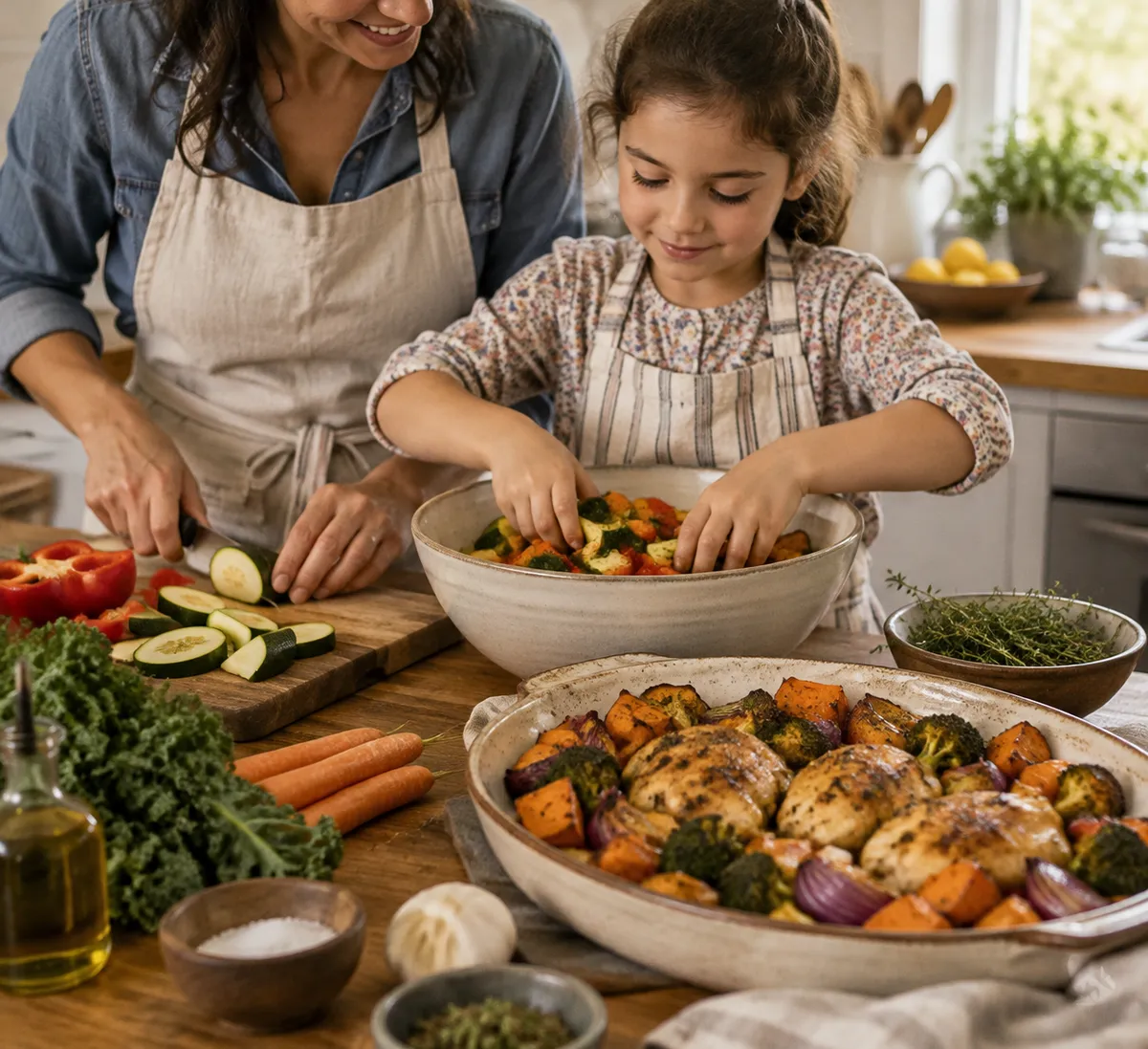
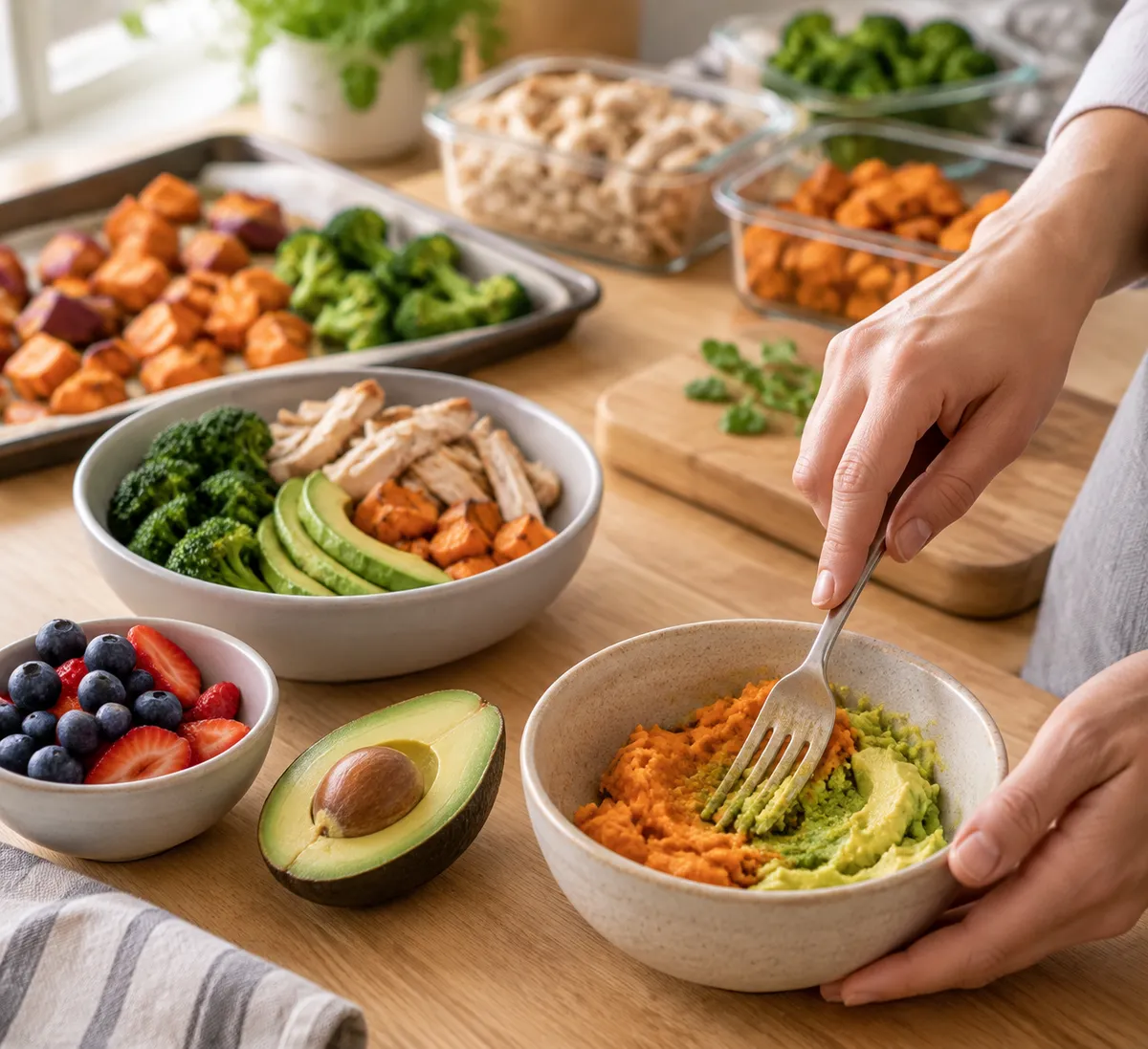
Toss cubed sweet potato and bite-size chicken thigh pieces with olive oil, garlic powder, and paprika. Spread on a sheet pan and roast at 425°F for about 25 to 30 minutes, until the chicken is cooked through and the potatoes are soft. Add broccoli for the last 12 minutes.
Hidden-veggie turkey meatballs
Mix ground turkey with one egg, a handful of finely grated zucchini, and a pinch of garlic powder. Roll into small balls and bake at 400°F for about 15 to 18 minutes, until cooked through. They freeze well and work cold in a lunchbox.
A Simple Batch-Cooking Routine
You don't need a four-hour Sunday. Aim for 90 minutes and three components:
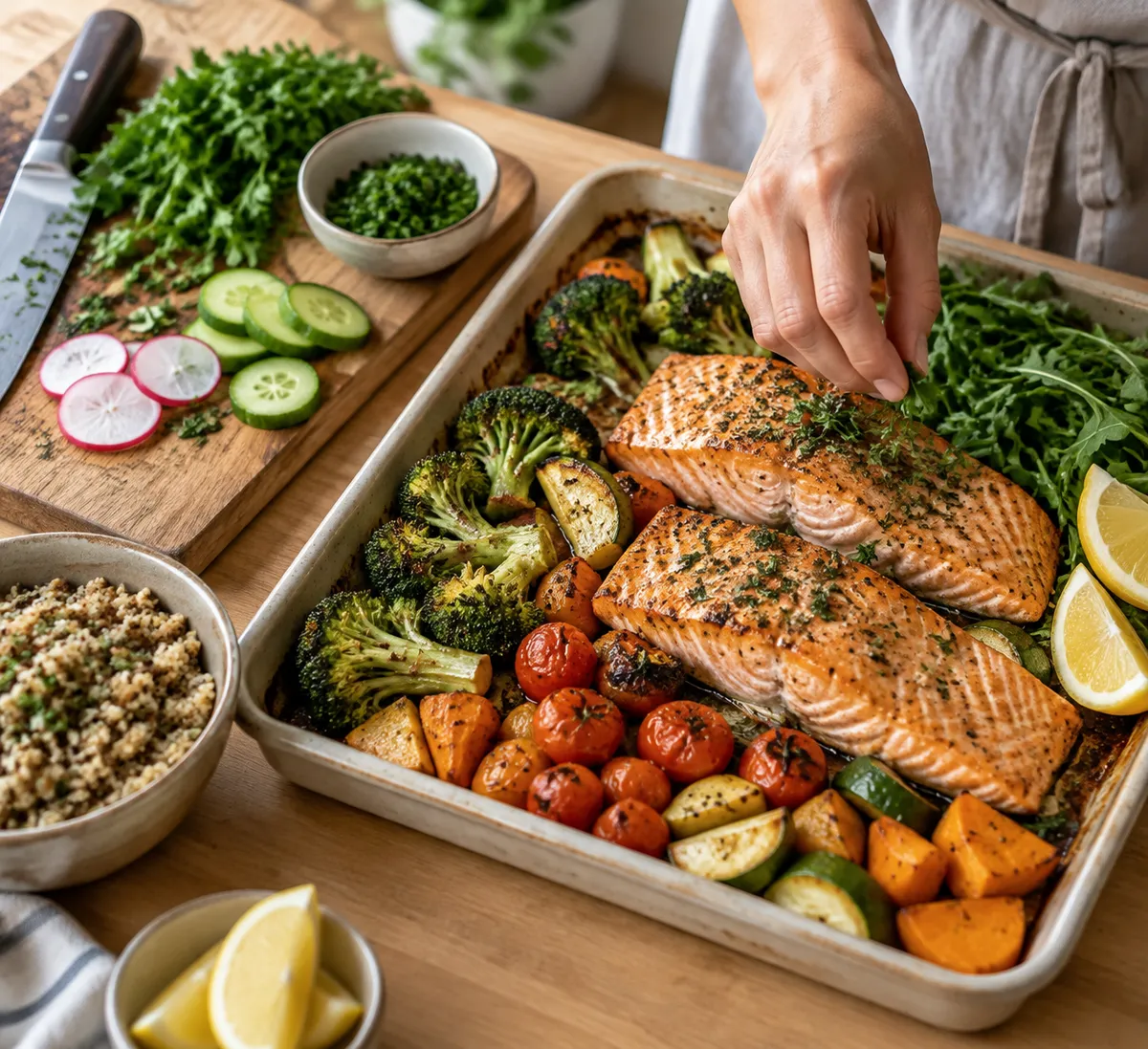
- Roast a tray of vegetables (sweet potato, carrots, broccoli).
- Cook one protein in bulk: meatballs or a pan of shredded chicken.
- Prep one grab-and-go snack: hard-boiled eggs or banana-almond muffins.
Mix and match through the week. Monday might be meatballs with roasted carrots, Wednesday shredded chicken in a sweet potato, Friday an egg-and-veggie scramble using leftovers. Freeze half the meatballs so week two is partly done already.
Make It Portable
Kids' food has to survive a diaper bag, a backpack, or a car seat. Good options include:
- Cold meatballs with avocado slices
- Hard-boiled eggs, peeled
- Berries and a handful of nuts (for children old enough to eat them safely)
- Mini muffins made with banana and almond flour
Pack in small containers so a child can pick at it, and keep an ice pack in the bag for anything with egg or meat.
Keep the Mood Light
Food rules that feel strict at home can backfire. Offer the new thing alongside something familiar, let kids touch and smell it, and don't turn dinner into a negotiation. Repeated, low-pressure exposure is the habit that matters, and it's one you can start with a newborn's first spoonful or a school-ager's lunchbox.
Your First Step
This week, pick one meal from above, cook it once, and freeze the extras. One reliable recipe is the start of a routine that can carry your family through whatever the next fifteen years bring.